On this page
Pool maintenance is a set of small habits. Almost none of them are difficult. The trouble for a first-year owner is knowing what to look at and how often, and most of the expensive problems come from the checks that got skipped rather than the ones that were done wrong.
This is the checklist I would hand someone who just took over a pool. It is organized by how often each item comes up. The weekly list is expanded in weekly pool maintenance; this page is the overview.
Every Day or Two
These take a couple of minutes and catch problems early.
- Look at the water. Clear and blue is the goal. A green tint, haze, or a dull look means chemistry or filtration needs attention today, not this weekend. If it is already green, go to how to clean a green pool.
- Look at the skimmer. Water should cover the opening with the weir door floating. Empty the basket if it has anything in it. A low water level or a full basket starves the pump.
- Check the return jets. Put a hand in front of one. Flow should feel like it did yesterday. Weak flow is the first sign of a basket, valve, or priming problem; see why a pool pump runs but does not move water.
- Glance at the equipment pad. The pump should sound normal and the pad should be dry. A new puddle under the filter or pump gets investigated, not ignored.
- Skim what is floating. A leaf rake pass before leaves sink saves vacuuming later.
Every Week
Pick a day. Doing the same things in the same order makes it quick and makes it obvious when something is different.
Clean
- Empty the skimmer and pump baskets. Shut the pump off before opening the pump lid; for a cartridge filter, relieve pressure at the air relief first.
- Brush the walls, steps, and waterline. On a vinyl pool, use a liner-safe brush; see how to brush an above-ground pool.
- Vacuum the floor, or run the robotic cleaner and empty its basket. A robot does not replace the baskets, the brush, or the water test, which I cover in what a robotic pool cleaner does not replace.
Test and Adjust
- Test free chlorine and pH at minimum. Alkalinity if you have the strips or kit for it. Test strips are fine for a weekly check if you read them correctly.
- Adjust pH first, then chlorine. Add chemicals per the label for your pool's volume, with the pump running, and never mix products.
- Write the results down.
Check the Equipment
This is the part beginners skip.
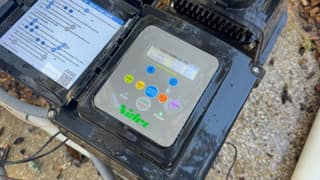
- Pump controller. Confirm the schedule is intact and no error is displayed. A power blip can reset a timer.
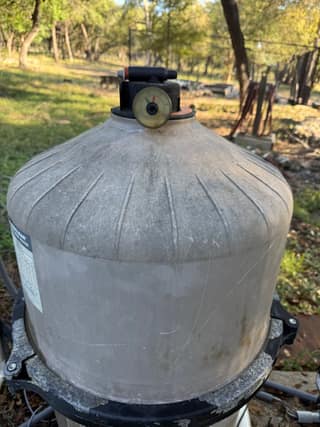
- Filter pressure. Read the gauge at your normal pump speed and write it down. Compare with the clean baseline. When it is up by the amount your manual specifies, usually 7–10 PSI, schedule a cleaning. Details in why pool filter pressure is too high.
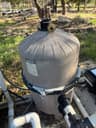
- Filter seam and fittings. Run a hand around the clamp or ring and look at the gauge and relief valve threads. Damp means something is starting; see why a pool filter leaks around the lid.
- Pump lid. Look through it. The basket should be full of water with no air pocket while the pump runs.
Every Month or So
- Test the slower-moving chemistry. Cyanuric acid, calcium hardness, and total alkalinity do not change daily, but they drift. Check them monthly or whenever chlorine seems to be behaving oddly.
- Clean the filter if the gauge says so. For a cartridge filter this means shutting down, depressurizing, pulling the cartridges, and rinsing between the pleats. The procedure is in how to clean pool filter cartridges.
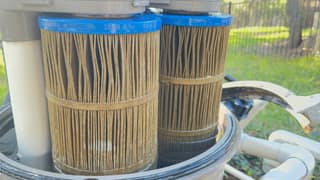
- Inspect the cartridges while they are out. Torn fabric, cracked end caps, or a collapsed core means replacement. Dirt means rinsing. The distinction is in how to change a pool filter cartridge.
- Check the water level against the skimmer. Evaporation in summer and rain in other seasons move it more than people expect.
- Walk the plumbing. Every valve handle in its normal position, no new drips at unions, no wet ground.
Once a Season
- Record the clean filter baseline. After a cleaning, note the pressure at your usual pump speed. That number is what everything else is compared to.
- Replace worn consumables. Pump lid O-ring, test strips past their date, a cracked skimmer basket, a brush with splayed bristles.
- Review the log. Shorter intervals between filter cleanings, rising "after cleaning" pressure, or chlorine that will not hold all point to something that changed.
- Prepare for the season change. Opening and closing procedures vary by climate and pool type. Follow your equipment manuals and, for a first year, consider having a technician walk you through it once.
What to Keep a Record Of
A notebook or a notes app is enough. Record:
- Test results and the date.
- Each chemical addition, with the product and amount.
- Filter pressure and the pump speed it was read at.
- Dates of filter cleanings, with pressure before and after.
- Anything replaced or serviced.
The record turns "something seems off" into "the pressure has climbed 6 PSI in two weeks, which it did not do last month." That is the difference between guessing and knowing.
The Safety Habits
A few things that are not optional, no matter the task:
- Shut the pump off, and make sure it cannot restart, before putting a hand in the skimmer, opening the pump lid, or touching the filter.
- Relieve filter pressure at the air relief and confirm the gauge reads zero before releasing any clamp, ring, or knob.
- Never tighten a leaking filter closure while the pump is running.
- Reopen the circulation valves before starting the pump after any service, and bleed the air from the filter until it streams water.
- Store chemicals dry, separated, and closed, and never mix them.
None of this takes long. The equipment checks, in particular, are a minute a week. They are the minute that keeps a dirty cartridge from becoming a burned-out pump.
Frequently asked questions
How often should a beginner test pool water?
Test chlorine and pH at least a couple of times a week, and daily during heavy use or hot weather. The CDC's guidance for pools in use is to check chlorine and pH at least twice a day. Test alkalinity, cyanuric acid, and calcium hardness less often, roughly monthly, unless something is off.
How often should I clean the pool filter?
Let the pressure gauge decide. Clean a cartridge filter when the pressure rises the amount your manual specifies above its clean baseline, often 7–10 PSI, or when flow drops. Check the gauge weekly and note the reading.
How long should the pool pump run each day?
Long enough to turn the water over at least once, which depends on pool volume and pump flow. Many owners run 8–12 hours in summer, often at a low speed on a variable-speed pump. Your pump and local utility may have specific guidance. Cloudy water with good chemistry is a sign run time or filtration is short.
What should I write down?
Test results, chemical additions with amounts, filter pressure at a known pump speed, and the dates of any cleaning or service. Over a season those notes answer most questions about what changed and when.
What is the one thing beginners most often skip?
Looking at the equipment pad. Baskets, the pressure gauge, the pump lid, and the filter seam only take a minute to check, and the problems they reveal are the ones that turn into expensive repairs when ignored.