


On this page
A floor cleaner can leave an above-ground pool looking tidy while a brown line remains at the surface. Dirt also collects under the top rail, around the skimmer and return, behind the ladder, and in the curved cove where the wall meets the floor.
Brushing puts direct contact on those places. It loosens film and moves settled material, but it does not remove debris from the water or correct poor chemistry. Plan the next step before the first stroke: filtration, a manual vacuum, or a robotic cleaner still has to collect what comes off the liner.
Start With a Brush Made for Vinyl
Use soft nylon or polypropylene bristles on a vinyl liner. The head should have a molded back or protected ends, with no exposed wire, screw, sharp edge, or cracked plastic.
This is a surface-specific choice, not a matter of how gently a metal brush is used. Pentair's brush specifications identify a nylon model with end caps for vinyl pools and reserve its stainless-steel algae brushes for plaster, concrete, and gunite.
You will also need:
- a telescopic pole long enough to reach without leaning over the rail;
- a vinyl-safe leaf rake for sticks and heavy leaves;
- a vacuum or cleaner for the dirt that settles; and
- shoes with traction on wet ground or decking.
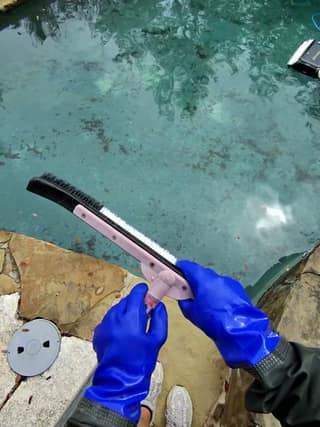
If the pole connection slips or the brush frame has a burr, replace or repair it first. A damaged tool is a larger risk to the liner than the dirt you are trying to remove.
1. Take Out Anything the Brush Should Not Drag
Remove twigs, acorns, stones, and piles of leaves before brushing the floor. A brush can press a sharp object into the vinyl or break a large debris pile into smaller pieces that are harder to collect.
Use a deep-bag net for the bulk load; the technique is covered in the pool leaf-rake guide. If cloudy water hides the floor, stay out of the pool and work from the deck. Do not return swimmers until the entire bottom is visible and the water has tested within its required operating ranges.
2. Clean the Waterline in Short Sections
The waterline receives sunscreen, pollen, oils, dust, and floating debris. Some of the line sits above the route of a submerged cleaner, so another robot cycle may never touch it.

Pick a starting point and move around the perimeter in overlapping sections. Use short vertical or diagonal strokes. Keep the bristles flat enough to spread the load, and let several passes lift the film instead of trying to erase it with one hard push.
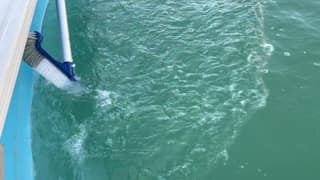
If the liner moves sharply under the head or the pole bows, ease off. Pressure should keep the bristles in contact, not deform the wall.
3. Work Around Fittings Without Using Them as a Brace
Brush the narrow areas around the skimmer faceplate, return fitting, ladder mounts, seams, and capped ports. Angle the bristles into the edge while keeping the hard back of the brush away from screws and plastic fittings.
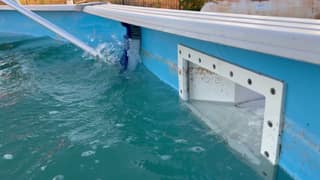
Do not push the brush into the skimmer opening or use the faceplate as a brace. If the housing or basket needs attention, follow the shutdown sequence in the above-ground skimmer cleaning guide.
The pump may stay on for normal brushing when the system is running correctly. Turn it off before opening circulation equipment or reaching near suction, and prevent an automatic schedule from restarting it while you work.
4. Brush the Wall From High to Low
After the waterline and fittings, divide the wall into lanes. Brush from the upper wall toward the floor with enough overlap that no narrow strip is left untouched.
Working downward gives loosened material one direction to travel. Random strokes tend to spread the same dirt over an area you already covered.
Spend an extra pass on:
- the wall behind the ladder;
- seams and wrinkles where material can settle;
- any section with weak return flow; and
- the cove at the base of the wall.
Use the bristles, not the end of the head, in the cove. If a full-size brush cannot sit against the curve, a smaller vinyl-safe brush gives better control.
5. Move Floor Debris Toward the Collection Path
Brush the floor last. Slow, directed strokes can move a light layer of dust toward the vacuum path or into the area a robot can reach.
Do not stir the whole floor into a cloud. Once fine material is suspended, the brush loses contact with it and the main filter has to wait for that material to pass through the circulation system. For settled sediment, the manual above-ground pool vacuum guide is the more controlled method.
Keep only as much pole extended as the reach requires. Less flex at the pole gives more control at the head.
6. Remove What You Loosened
After brushing, use the collection method that fits the debris:
- let the main filter catch light suspended material;
- vacuum a defined patch of sediment slowly; or
- run a robot with filter media fine enough for the material.
Check the skimmer basket, filter pressure or flow, and cleaner basket afterward. Brushing that ends with a dirty filter left unattended has only moved the problem.
The weekly pool-maintenance routine puts this work in order with skimming, equipment checks, testing, and filtration.
Brushing During an Algae Cleanup
Brushing helps expose algae attached to the liner and lifts dead material so it can be filtered. It does not kill algae by itself.
For a green pool, remove solid debris, test the water with a suitable kit, make measured chemistry corrections from the product directions, brush all reachable surfaces, and keep cleaning the filter as it loads. Repeat the physical cleaning as needed; a single pass rarely reaches every seam, fitting, and sheltered area.
Use the green-pool cleanup guide for the testing and treatment sequence. Do not copy a chemical amount from another pool: volume, current test results, product strength, and cyanuric acid all affect the dose.
Know When to Stop Scrubbing
A surface film should change after a few controlled passes. A mark that stays fixed may be:
- calcium scale with a rough texture;
- a metal or organic stain;
- fading or bleaching in the liner print;
- discoloration behind the liner; or
- damage to the vinyl itself.
More force will not identify it. Test the water, compare the mark above and below the waterline, and check the liner maker's care instructions before applying a pad or cleaner. Household solvents, abrasive scrubbers, and unapproved stain products can remove print or weaken vinyl.
For routine care, one careful lap through the known collection points is more useful than repeated hard brushing across clean material. The signal to brush again is returning film or debris, not a fixed number of forceful passes.
Frequently asked questions
What brush is safe for an above-ground vinyl pool?
Choose a pool brush labeled for vinyl liners, with soft nylon or polypropylene bristles and smooth, protected ends. Do not use stainless-steel, wire, or blended-metal bristles unless the liner manufacturer explicitly approves them.
How often should I brush an above-ground pool?
A weekly pass over the waterline, cove, fittings, ladder area, and other missed spots is a useful starting point. Brush sooner when you see film, after a storm or heavy leaf fall, and repeatedly as part of an algae cleanup.
Can the pump run while I brush the pool?
It can run during ordinary brushing if the circulation system is operating normally. Shut it down as the equipment manual requires before opening a basket, changing a valve, connecting a vacuum, or putting a hand near a suction opening.
Why will a dark mark not brush off the liner?
It may be scale, a metal or organic stain, faded vinyl, or material beneath the liner rather than loose dirt. Stop adding pressure and identify the mark before using a cleaner or stain treatment.


