


The verdict · Breville Oracle BES980XL
The Breville Oracle makes espresso we genuinely love and leaves just enough of the process in our hands. After more than two years it still works like a champ. Occasional shot inconsistency is the only thing keeping it from a higher score.
What works
- The espresso tastes amazing, and that has not changed in more than two years
- Automatic grinding, dosing, and tamping without losing the satisfying hands-on part
- Dual boilers mean we can pull a shot while the milk steams
- Automatic milk texturing with adjustable temperature and foam level
- Solid brushed stainless steel build that still looks and feels substantial
What doesn't
- Shots can be inconsistent, so you still have to pay attention to extraction
- Not maintenance-free: grounds, baskets, and the steam wand need daily attention
- Large footprint; plan for hopper and water-tank access, not just the box
Breville Oracle BES980XL — key specs
| Boilers | Dual stainless steel boilers with PID temperature control and heated group head |
|---|---|
| Pump | 15 bar Italian pump, low-pressure pre-infusion, 9 bar extraction |
| Grinder | Integrated conical burr grinder with 45 grind settings; automatic dosing and tamping |
| Portafilter | 58 mm stainless steel |
| Milk | Automatic steam wand, 104–167°F, 9 texture levels; manual mode available |
| Water tank | 2.5 L (84 oz) with built-in filter |
| Bean hopper | About 8 oz (280 g) |
| Dimensions | About 15 W × 16.25 D × 18 H inches |
| Weight | About 35 pounds |
| Power | 1,800 watts |
| Warranty | 2-year limited |
On this page
We have owned the Breville BES980XL Oracle Espresso Machine in Brushed Stainless Steel for over two years, and we still love it. The coffee tastes amazing, the machine feels solid, and it continues to work like a champ.


It is not flawless. Shots can be inconsistent, and there is more involvement than you might expect from something described as automatic. But that second point is actually one of our favorite things about it.
The Oracle gives us enough of the espresso-making experience to enjoy the process without requiring us to handle every detail ourselves. After more than two years, that balance still feels right. It is also why the Oracle sits at the top of our best espresso machines guide.
Why We Still Love the Coffee
Ultimately, the coffee is the reason we are happy with the Oracle. Convenience would not mean much if we were compromising on what ended up in the cup.
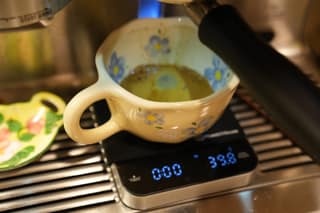
For us, the flavor is what makes the machine worth using. There is a difference between being satisfied that an appliance does its job and genuinely enjoying what it makes. We fall firmly into the second category.
We would not call every shot perfect. That would gloss over our biggest criticism. But occasional inconsistency has not changed our overall opinion: this is a very capable espresso machine that makes coffee we really love.
Breville pairs its dual-boiler design with a heated group head and electronic PID temperature control. Those features are intended to keep brewing conditions stable, while adjustable shot controls let you tailor extraction. That hardware is part of the appeal, but it is not a guarantee that every shot will taste identical.
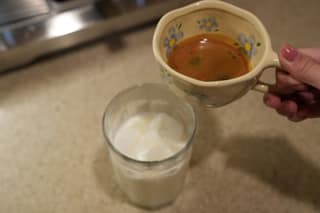
It is also important to separate the machine from the ingredients. Breville emphasizes fresh beans and adjusting the grind to suit them. An automatic preparation system does not eliminate those variables.
Our advice is to give the Oracle decent beans and a little attention rather than expecting an expensive machine to make every bag taste the same.
The Right Amount of Hands-On Involvement
The Oracle automates grinding, dosing, tamping, and milk texturing. It also uses a 58mm portafilter, the handled holder for the coffee basket.
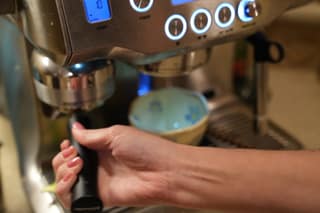
You still move that portafilter from the grinding station to the brewing position, start your shot, and empty the used grounds afterward. You are participating in making the drink rather than simply collecting it from a dispenser.
That is exactly what we like.
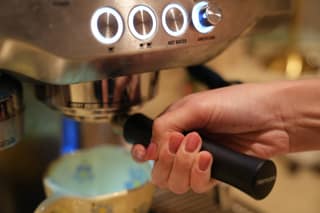
We enjoy having something to do, but we do not need every cup to become a test of our tamping technique. The Oracle takes care of the repetitive preparation while leaving the satisfying part intact.
For someone who wants the least possible interaction, this arrangement may sound inconvenient. For us, it is the point. We would rather have a small, enjoyable routine than either complete detachment or a process that demands constant concentration.
How to Use the Breville Oracle BES980XL
The controls can look intimidating at first, but the basic workflow is straightforward. Read the model-specific manual before the initial setup; everyday operation becomes easier to understand once you separate it into preparation, brewing, and cleanup.
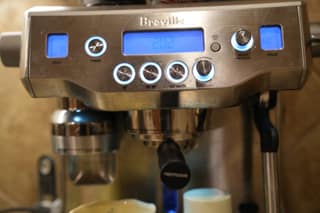
Prepare the machine. Fill the tank with fresh, cold water, complete Breville's first-use setup and flushing instructions, and allow the machine to heat. Preheat the portafilter and cup, then dry the basket before grinding.
Grind and tamp. Insert the portafilter into the grinder outlet. Rotate it to the right and guide it back to center to start the automatic grinding, dosing, and tamping cycle. Wait until the cycle finishes before removing it.


Move over and brew. Secure the prepared portafilter in the group head, place your cup underneath, and select the appropriate shot button. Once extraction finishes, remove your cup before taking out the portafilter. Empty the grounds and rinse the basket before preparing another drink.
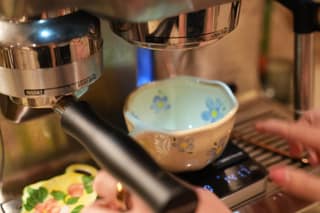
For a new owner, we would keep things simple initially. Learn what the main controls do, establish a repeatable routine, and resist the urge to change several settings after one disappointing coffee.
There is room to experiment, but the appeal of this machine is that you do not have to approach every drink as an experiment. A familiar workflow lets you spend less time thinking about the equipment and more time enjoying the result. We photographed every step in our guide to using the Breville Oracle, and the drink we make most often is in our guide to making a latte at home.
Automatic Milk Texturing Is a Big Part of the Appeal
The adjustable automatic steam wand and separate espresso and steam boilers are meaningful features. You can select milk temperature and texture, and brew espresso while steaming milk rather than completing those tasks one after another.
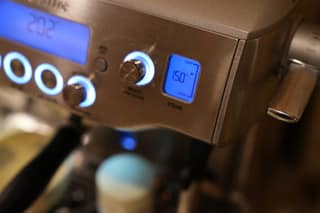
That is a useful combination for anyone who enjoys lattes or cappuccinos. The milk system is not merely an accessory attached to an espresso maker; it is part of what makes the assisted workflow worthwhile.
For automatic texturing, briefly purge the wand, then fill the jug with cold milk within its marked range. Lower the wand so milk covers its seal, then press and release the steam lever. Steaming stops at the selected temperature.
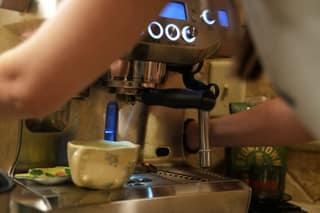
We like that this approach leaves room for preference without making every drink a lesson in steaming technique. Someone who enjoys practicing can take a more involved approach, but that is not a requirement for appreciating the machine.
For our tastes, the Oracle's strongest selling point is this combination of participation and assistance, not automation for its own sake.
Our Biggest Complaint: Shots Can Be Inconsistent
This is the drawback we would tell a friend about before recommending the Oracle.
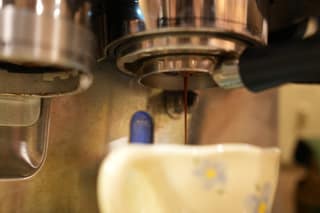
Despite the automated preparation, the shots are not always as consistent as we would like. We still love the overall results, but buying the Oracle does not mean never needing to pay attention to extraction.
We also would not pin every imperfect shot on one component without testing it. Our experience tells us the result can vary; it does not establish a specific mechanical cause.
For troubleshooting, Breville recommends adjusting the grind: finer when flow is too fast, coarser when it is too slow. Change one variable at a time.
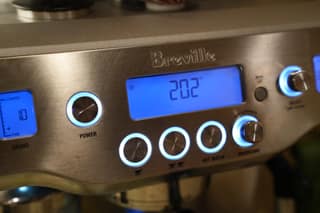
The practical lesson is not to panic after one disappointing cup or start changing everything at once. Make a small adjustment, evaluate the next result, and keep the process understandable. Our dial-in guide is that method step by step, and the bottomless portafilter we fitted is how we see what a shot is doing.
For us, the inconsistency is an annoyance rather than a dealbreaker. For someone whose priority is absolute repeatability with no adjustments, it deserves more weight in the buying decision.
Cleaning Is Still Part of Ownership
Automatic does not mean maintenance-free. There are still coffee grounds to discard, a basket to rinse, and milk residue to remove. Those small tasks remain part of the process, even with the automated features.


The steam wand deserves particular attention. Wipe it after steaming and lower it to trigger its automatic purge. Follow the manual for cleaning cycles, water-filter replacement, and descaling.
Our view is that this is reasonable upkeep for the kind of machine the Oracle is, but it should be part of the purchasing decision.
Think about the whole routine, not just the moment espresso pours into the cup. Someone who already resents cleaning a simpler coffee maker probably will not become enthusiastic about maintenance because the new machine is more expensive.
We would also keep the manual accessible. Maintenance is one area where following the correct procedure matters more than improvising. The daily, weekly, and monthly jobs we actually do are in our espresso machine cleaning routine.
Solid Construction, but Plan Your Counter Space
We consider the Oracle a very solid coffee maker. The brushed stainless steel finish suits the machine, and we like its substantial appearance.
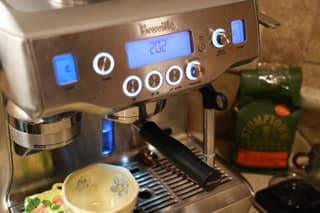
However, plan where it will live. Leave room to access the bean hopper and water filling point, rather than considering only the space occupied by the machine itself.
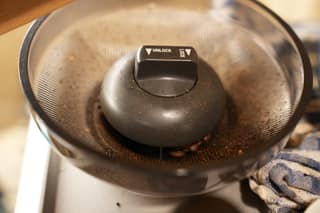
Do not assess fit solely by whether it can physically squeeze under a cabinet. Think about using it there, including moving the portafilter and handling the milk jug.
The original Oracle has an LCD interface with physical controls rather than a touchscreen. We are more interested in whether the process works for us than whether the display looks particularly modern. Our Oracle shares the counter with a Moccamaster KBGV for drip mornings, and the two together take up a real corner of the kitchen.
Is the Breville Oracle Worth It?
For us, yes.
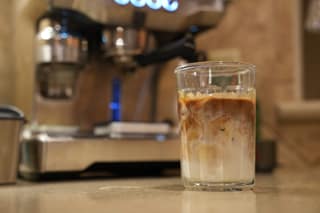
Our Oracle is still going strong after more than two years, and we remain genuinely happy with it. That is our ownership experience, not a promise that every unit will have the same lifespan.
We would judge its value by how much you enjoy both the coffee and the routine. Buying solely to save money on café drinks is a different calculation, and it depends on your actual habits. An expensive appliance is not a bargain simply because it has more features.
We would recommend its approach to someone who enjoys making espresso but wants assistance with grinding, tamping, and milk preparation. We would be more cautious recommending it to someone who wants a completely hands-off drink or has no patience for occasional adjustments. If you are weighing it against cheaper manual machines or a fully automatic one, our best espresso machines guide covers the alternatives at every price.
The coffee tastes amazing, the balance of manual involvement feels right, and the machine continues to work like a champ. Shot consistency could be better, but it has not stopped us from loving the Oracle. That adds up to a 9.0 out of 10.
Where to Buy
Check the Breville Oracle BES980XL price on Amazon.
The Amazon link is an affiliate link. Terra Hills may earn a commission at no extra cost to you. It does not change our rating or what we say about the machine.
More Coffee Guides
Frequently asked questions
Is the Breville Oracle worth it?
For us, yes. After more than two years the coffee still tastes amazing and the machine still works like a champ. It is worth it for someone who enjoys making espresso but wants help with grinding, tamping, and milk. It is harder to justify for someone who wants a fully hands-off drink.
Is the Breville Oracle fully automatic?
No. It automates grinding, dosing, tamping, and milk texturing, but you still move the portafilter from the grinder to the group head, start the shot, and knock out the puck. We like that balance, but it is not a one-touch machine.
What is the difference between the Breville Oracle and the Oracle Touch?
The original Oracle (BES980XL) uses an LCD with physical buttons and dials. The Oracle Touch adds a touchscreen with drink presets. Both grind, dose, tamp, and texture milk automatically. We own the original and have not missed the touchscreen.
Why are my Breville Oracle shots inconsistent?
Fresh beans and grind size matter more than anything else. Breville's advice is to go finer when the shot runs too fast and coarser when it runs too slow, changing one variable at a time. Our shots vary occasionally even after more than two years, and a small grind adjustment usually fixes it.
How much maintenance does the Breville Oracle need?
Daily: knock out the puck, rinse the basket, and wipe and purge the steam wand. Periodically: run the cleaning cycle when prompted, replace the water filter, and descale per the manual. It is reasonable upkeep, but it is not nothing.

