


On this page
Dialing in is the process of adjusting the grind until a shot tastes right. It sounds fiddly, and it can be if you change three things at once. Done one variable at a time, it usually takes two or three shots.
This is the method we use on our Breville Oracle. It applies to any espresso machine with an adjustable grinder.
Fix Everything Except the Grind
Before you touch the grinder, lock down the other variables:
- Dose: the same weight of coffee every time. We use 18 grams.
- Ratio: the same output weight every time. We stop at 36 to 40 grams. See our espresso ratio guide.
- Tamp: the same level press every time. See our tamping guide.
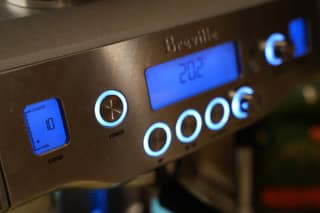
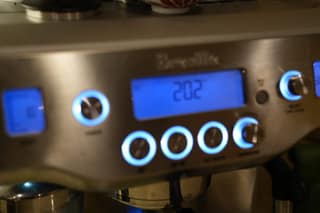
- Temperature: leave it alone. Ours stays at 202°F.
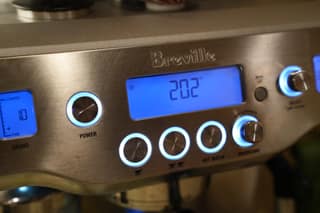
Now the grind is the only thing left that can change the shot. If a shot is wrong, the grind is the answer, and you will know which way to move it.
Pull a Shot and Watch Three Things
Start the shot with the cup on a scale and note the time.
When the first drops appear. On a well-dialed shot, espresso starts dripping from the basket around 6 to 10 seconds after the pump starts.
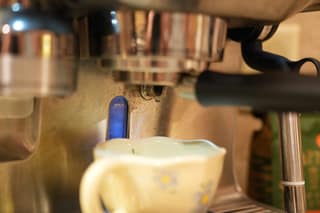
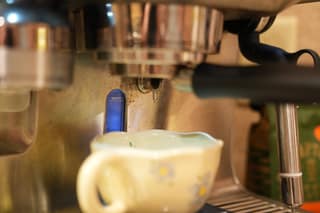
How it flows. Through a bottomless portafilter you can see it directly. It should start as slow drips, gather into a single stream from the center of the basket, and stay steady until you stop it.
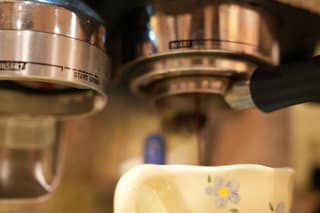
How long it takes to reach the target weight. Around 25 to 30 seconds is the normal window for a 1:2 shot.
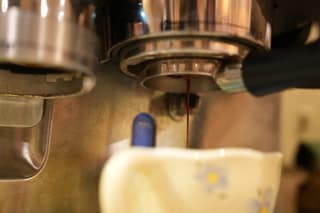
If the Shot Is Fast: Grind Finer
A shot that hits 36 grams in 15 or 20 seconds is under-extracted. The water ran through too quickly to pull enough out of the coffee. It will taste sour, thin, and sharp, with pale, fast-fading crema.
Move the grind one step finer and pull again with the same dose and ratio.
If the Shot Is Slow: Grind Coarser
A shot that takes 40 or more seconds, or that drips and never forms a stream, is over-extracted. The water sat in the coffee too long and pulled out the bitter end. It will taste harsh, bitter, and dry, sometimes with dark, mottled crema.
Move the grind one step coarser and pull again.
If the Time Is Right but the Taste Is Not
Sometimes a shot lands in the window and still tastes off. Then adjust the ratio, not the grind:
- Sour at 1:2? Pull a little longer, to 1:2.3 or so.
- Bitter at 1:2? Pull a little shorter, to 1:1.8.
Change the ratio only after the grind is giving you a normal flow. Chasing taste with the grind while the flow is wrong leads in circles.
One Variable, One Shot, Then Taste
The rule that makes this work: change one thing, pull one shot, taste it. Two changes at once tell you nothing, because you cannot know which one helped.
A typical dial-in on a new bag looks like this:
- Shot 1 at the old setting: fast and sour. Grind one click finer.
- Shot 2: 24 seconds, better, still a little sharp. One more click finer.
- Shot 3: 28 seconds, balanced. Done.
That is three shots and about ten minutes. The beans will drift as they age, usually needing a click finer after a week or so, and a new bag starts the process over.
When It Is Not the Grind
If the grind is right and shots still vary, look elsewhere:
- Stale beans. Weak crema, flat taste, fast shots that do not improve with a finer grind. Nothing fixes this except fresh coffee.
- Uneven dose or tamp. Spraying, side drips, or a cracked puck. Level and tamp more carefully.
- Dose drift. You stopped weighing and the dose wandered. Weigh again.
- Machine not up to temperature. Shots are sour no matter what. Give it more time to heat.
Occasional variation is normal. Our Oracle review is honest that even with automatic grinding and tamping, some shots need a click of adjustment. That is not a flaw to fix; it is the coffee changing. For a symptom-by-symptom list, see espresso troubleshooting.
More Coffee Guides
Frequently asked questions
Should I grind finer or coarser for espresso?
Finer if the shot runs fast and tastes sour or thin. Coarser if it runs slow and tastes bitter or harsh. Change one step at a time and pull another shot before changing anything else.
How long should an espresso shot take?
About 25 to 30 seconds from pump start to your target weight, for a 1:2 ratio. Use the time as a signal, not a goal. Taste decides whether the shot is right.
Why do I need to dial in again with a new bag of beans?
Every coffee grinds differently. Roast level, age, and origin all change how fine the grind needs to be. Expect the first shot or two from a new bag to be off, and expect to need one or two grind clicks to fix it.
Why did my espresso change without changing anything?
Beans age. A bag that was dialed in a week ago will usually need a finer grind as it loses gas, and it will run faster. Humidity can also shift the grind slightly. Adjust by one click and move on.
How does the Breville Oracle grind setting work?
The dial runs from 1 (finest) to 45 (coarsest) on the BES980XL. We sit around 10 for most medium roasts. One click is a meaningful change. Make a single-click move and pull a shot before moving again.


