

On this page
Espresso attracts accessories. Most of them are solutions to problems you do not have. After more than two years of daily drinks on our Breville Oracle, this is the short list of what is actually on the counter and gets touched every day.


1. A Small Scale
The most important thing on the counter that did not come with the machine. We weigh the beans for every shot and weigh the espresso as it pours. Those two numbers are the difference between shots that taste the same every day and shots that wander.
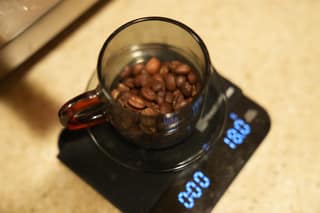
What matters: it reads in 0.1-gram steps, it is thin and small enough to sit on the drip tray with a cup on it under the group head, and it turns on fast. A built-in timer is nice. Ours is a compact battery-powered scale, and it has survived two years of drips.
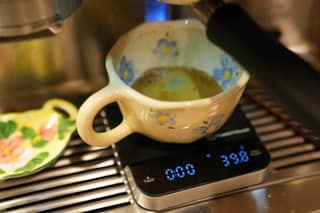
See the espresso ratio guide for how we use it.
2. A Bottomless Portafilter
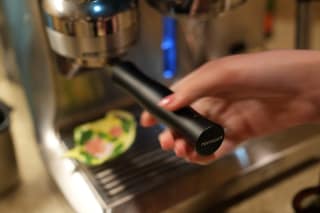
We replaced the stock spouted portafilter with a 58 mm bottomless one with a Normcore handle. The basket is exposed underneath, so you see the shot come out: a single center stream when things are right, spraying when they are not.
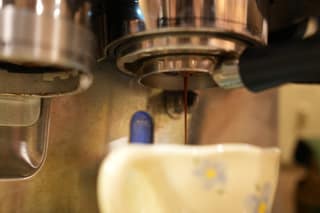
It is also easier to clean, with no chamber under the basket for old espresso to dry in. It seats in the Oracle's grinder cradle and locks into the group head like the original. Our bottomless portafilter guide covers fit and what to look for in the flow.
3. A Knock Box
A metal bin with a rubber bar across it. Tap the portafilter on the bar and the puck drops in. We empty it into the compost every day or two.
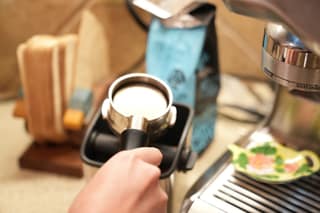
Get one with a removable bar for washing and a non-slip base. Size it for a couple of days of pucks, not a week; a full knock box smells.
4. A Hand Tamper
The Oracle tamps automatically in the grinder cradle, so this is the least necessary item here. We keep one anyway, because we like leveling the dose and giving the puck a finishing press, and because it is useful when the auto-tamp leaves a dimple.
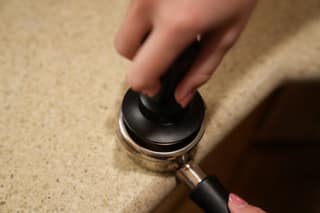
On a manual machine this is essential. Match the diameter to the basket and pick a handle you like holding. Our tamping guide covers technique.
5. A Dosing Cup
Any small cup works. Ours is a glass espresso cup that holds exactly one dose of beans and tips cleanly into the hopper. It lives on the scale.
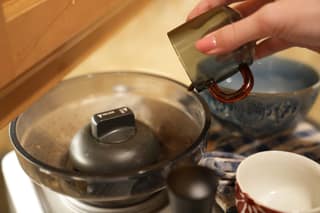
This is what makes single dosing a ten-second habit instead of a chore.
6. A Milk Jug, Whole Milk, and a Wand Cloth
For hot lattes: the stainless jug that came with the Oracle, whole milk, and a damp cloth that is used only for wiping the steam wand. The cloth is the one that matters; dried milk on a wand is the most avoidable mess in espresso.

7. Fresh Beans and a Place to Keep Them
Not an accessory, but it beats every item above. Beans with a roast date in the last month, kept sealed in the bag or an airtight container, out of the hopper. Nothing on this list fixes stale coffee.

What We Skipped
- Distribution tools. A finger levels the grounds. See the tamping guide.
- Precision baskets. The stock basket in the Oracle pulls fine shots. We might try one someday; we have not needed to.
- A separate grinder. The Oracle's built-in grinder is good enough that we have not been tempted, though our best espresso machines guide is honest that standalone grinders at this price do better.
- Tamping mats, stations, and portafilter stands. The counter works.
- Shot glasses with volume lines. The scale replaced them.
The whole list fits in one drawer and one corner of the counter. If you are starting out, buy the scale first, the knock box second, and the bottomless portafilter when you want to understand what your shots are doing.
More Coffee Guides
Frequently asked questions
What accessories do you need for an espresso machine?
A scale that reads to 0.1 gram, a tamper that fits the basket, and a knock box. Everything else is optional. A bottomless portafilter is the best optional upgrade because it shows you what the shot is doing.
Do you need a knock box for espresso?
You need somewhere to put the puck. A knock box makes it one tap instead of digging grounds out of the basket over the trash. It is cheap and used after every single shot, so yes.
Is a bottomless portafilter worth it?
For anyone who wants to improve their shots, yes. It exposes channeling and uneven flow that spouts hide, and it is easier to clean. It fits any machine with a standard 58 mm group head, including the Breville Oracle.
Do you need a distribution tool for espresso?
No. A finger across the top of the basket levels the grounds. Distribution tools do the same job and look nicer. We skipped it.
What scale is best for espresso?
One small enough to sit on the drip tray with a cup on it, reading in 0.1-gram steps, ideally with a timer. Ours is a compact battery-powered scale that lives beside the machine.


