


On this page
Espresso is coffee brewed by forcing hot water through finely ground, compressed coffee at around 9 bars of pressure. The machine supplies the pressure. You supply five things: the right amount of coffee, ground fine enough, packed level, locked in, and stopped at the right moment.
This walkthrough is for straight espresso on any machine with a portafilter. We photographed it on our Breville Oracle, which automates the grinding and tamping, but every step applies to a manual machine. If you want milk in it, finish here and go to the latte guide.
Before You Start
- Let the machine heat fully. A cold group head makes sour espresso no matter what else you do. Give it the time the manual says, then a little more.
- Use fresh beans. Roasted in the past month, opened in the past two weeks. Stale beans have no crema and no sweetness, and nothing downstream fixes that.
- Put a scale on the drip tray. It is the only way to know what you made.


Step 1: Weigh the Dose
Tare a cup on the scale and weigh 18 grams of whole beans. That is the standard double for a 58 mm basket; a smaller basket may want 14 to 16. Weigh whole beans rather than grounds. It is faster and accurate enough.
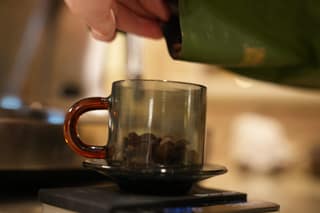
Why weigh? A gram is 5 percent of the dose. Eyeballing it moves the shot from balanced to sour or bitter with no other change, and then you cannot tell what went wrong. Our espresso ratio guide goes deeper.
Step 2: Grind Fine, Straight Into the Basket
Espresso grind is much finer than drip: closer to table salt than to sand. Grind the dose into the basket. On the Oracle the portafilter sits in a cradle and the machine does this; on a separate grinder, hold or rest the portafilter under the chute.
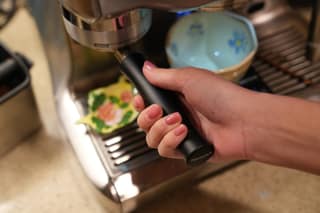
If you are new to the grinder, start in the middle of its espresso range. You will adjust it in Step 5. Do not try to judge the grind by looking at it; judge it by the shot.
Step 3: Level and Tamp
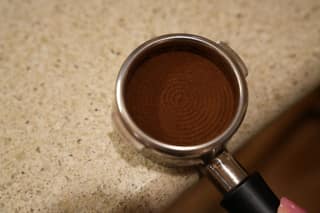
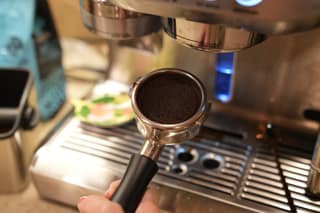
Even out the grounds with a finger so there is no mound. Set the portafilter on the counter, hold it steady, and press the tamper straight down until the coffee stops compressing. Keep the tamper level. Pressure matters less than level.
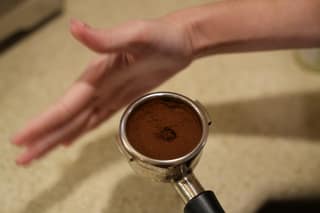
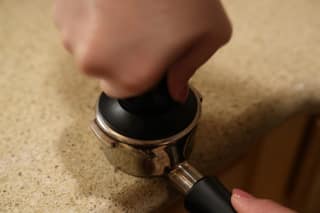
The puck should be flat and smooth. Wipe stray grounds off the rim so the portafilter seals. Our tamping guide covers what good and bad pucks look like.
Step 4: Flush, Lock In, and Pull Onto the Scale
Run water through the empty group head for a second to clear the screen and settle the temperature. Lock the portafilter in with a firm quarter turn. Put your cup on the scale under it and tare.
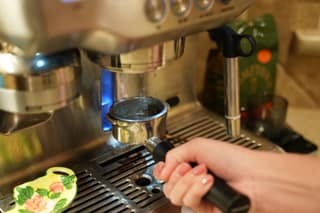
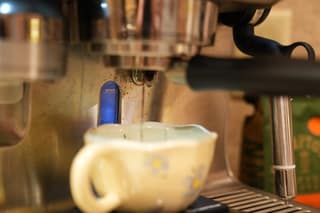
Start the shot and note the time. Espresso should begin dripping around 6 to 10 seconds in, gather into a steady stream, and reach 36 to 40 grams in about 25 to 30 seconds. Stop it a gram or two early; it keeps dripping after the pump stops.
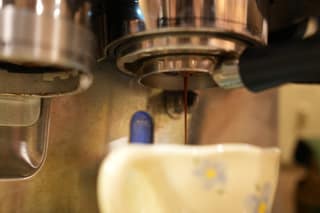
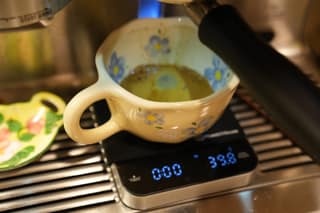
Drink it or use it right away. Crema and sweetness fade within a minute or two.
Step 5: Taste, Then Adjust One Thing
The first shot on a new bag is almost never right. That is normal. Taste it and read the time.
- Fast and sour (done in under 20 seconds, sharp, thin): grind finer.
- Slow and bitter (over 35 seconds, harsh, dry): grind coarser.
- In the window but still off: adjust the yield instead. Sour, pull a little longer; bitter, a little shorter.
Change one thing, pull another shot, taste again. Two or three rounds usually lands it. That is dialing in, and it is the whole skill of espresso.
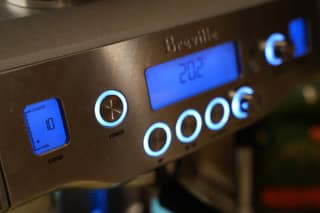
Step 6: Clean Up Now
Knock out the puck, rinse the basket, flush the group, and lock the empty portafilter back in. Thirty seconds, and the machine is ready for the next shot. Our cleaning routine covers the rest.
What Beginners Get Wrong
- Not weighing. The dose wanders, and so does everything else.
- Changing three things at once. You learn nothing from the next shot.
- Blaming the machine for stale beans. Weak crema and flat taste are the beans. Buy fresh.
- Giving up on the first bag. The first few shots on any machine are practice. By the second bag it is routine.
- Skipping the scale. Shot glasses with lines are not accurate enough. A $20 scale is.
If you are still choosing a machine, our best espresso machines guide covers everything from a $100 starter to the Oracle, and the espresso terms glossary explains every word used above.
More Coffee Guides
Frequently asked questions
What do you need to make espresso at home?
An espresso machine with a pump and a portafilter, a burr grinder that can grind fine enough for espresso, fresh whole beans, a tamper, and a small scale. The grinder matters as much as the machine.
Can you make espresso with pre-ground coffee?
Only with a pressurized basket, and the result is mediocre. Pre-ground coffee is rarely fine enough and goes stale within days. A burr grinder is the first thing to buy after the machine.
How much coffee is in a double shot of espresso?
About 18 grams of ground coffee producing 36 to 40 grams of liquid. A single shot is roughly half that. Most home machines ship with double baskets, and most people should just make doubles.
Why does my espresso taste sour?
It is under-extracted: the water passed through too quickly. Grind finer. If it is also fast, that confirms it. Sour espresso is the most common beginner result and the easiest to fix.
How long does it take to make espresso?
About two minutes once the machine is hot: thirty seconds to weigh and grind, thirty to tamp and lock in, thirty for the shot, and thirty to clean up. Heating the machine from cold takes longer than the drink.


