


On this page
A bad shot is information. Every symptom points to one or two causes, and the fix is almost always a single change. This guide matches what you taste and see to what to change, in the order we check on our own Breville Oracle.
The one rule throughout: change one thing, pull another shot, then decide. Two changes at once teach you nothing.
First, Rule Out the Beans and the Machine
Before adjusting anything, check two things that cause bad shots no matter how good your technique is.
Are the beans fresh? Look for a roast date. Beans more than a month past roast, or more than two weeks open, make thin, flat shots with little crema. No setting fixes stale coffee.
Is the machine fully hot? A group head that is still warming makes sour shots. Give it the full heat-up time, and flush a few seconds of water through the empty group before the shot.
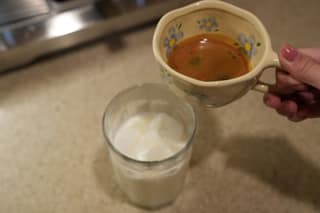
If both are fine, go by symptom.
Sour, Thin, Sharp
Cause: under-extraction. The water passed through too quickly and left flavor behind.
Confirm it: the shot probably ran fast, reaching its weight in under 20 seconds, and the crema was pale.
Fix: grind one step finer and pull again with the same dose and yield. If the time is already in the normal window and it is still sour, pull a slightly longer shot instead, to a 1:2.3 ratio or so.
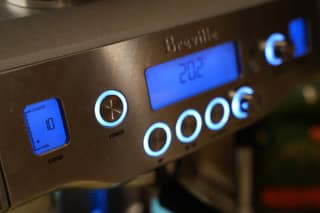
Bitter, Harsh, Dry
Cause: over-extraction. The water sat in the coffee too long and pulled out the bitter end.
Confirm it: the shot ran slow, over 35 seconds, maybe dripping without ever forming a stream. The crema may be dark and mottled.
Fix: grind one step coarser. If the time is normal and it is still bitter, pull a shorter shot, nearer 1:1.8. Very dark roasts taste bitter at most settings; a shorter ratio helps more than the grind.
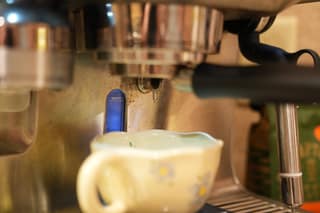
Too Fast
Cause: coarse grind, light dose, or channeling.
Check in this order:
- Dose. Weigh it. A dose two grams light runs fast and tastes weak. Our ratio guide explains why.
- Grind. If the dose is right, grind finer.
- Puck. If it sprays or runs from one side, see channeling below.
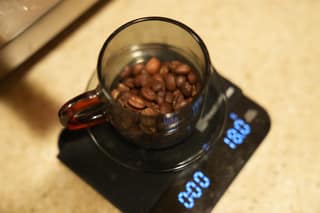
Too Slow or Choked
Cause: fine grind or heavy dose. Occasionally a clogged shower screen.
Check in this order:
- Dose. Too much coffee in the basket chokes the shot and can crack the puck against the screen. Check that the tamped puck sits below the basket rim.
- Grind. Grind coarser.
- Shower screen. If every shot is slow regardless of grind, flush and scrub the screen. See our cleaning routine.
Spraying, Side Drips, Uneven Flow
Cause: channeling. Water found a weak path through the puck.
Confirm it: on a bottomless portafilter you see a thin jet from one spot, or espresso running from the edge while the center is dry. The spent puck may have a hole or crack. The shot tastes sour and bitter at once.
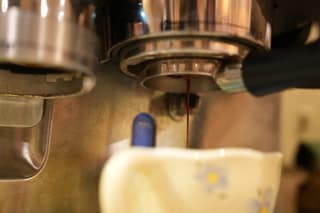
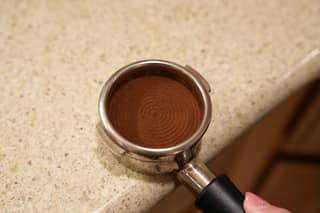
Fix: it is almost never the grind. Level the grounds before tamping, tamp straight down on a flat surface, and carry the portafilter level to the machine. Wipe grounds off the rim. Our tamping guide walks through all of it.
No Crema or Thin Crema
Cause: stale beans, nearly always. Also a coarse grind, a light dose, or a machine that is not up to pressure.
Fix: new beans with a roast date. If fresh beans still give thin crema, grind finer and check the dose. Crema also fades within a minute, so judge it right after the shot.
Weak or Watery
Cause: yield too long, dose too light, or both.
Fix: stop the shot sooner. If you are pulling 50 grams from 18, that is a lungo and will taste thin. Bring it back to 36 to 40 and weigh the dose.
Inconsistent From Shot to Shot
Cause: something is changing between shots.
The usual suspects:
- Dose drift. You stopped weighing. Weigh again.
- Tamp variation. Different pressure or angle each time. Same routine every shot.
- Beans aging. A bag dialed in last week runs faster this week. Go a click finer and expect to keep doing so.
- Hopper beans going stale. Beans sitting in the hopper for days. Single dose instead.
- Temperature not settled. Shots pulled back to back without a pause, or the first shot of the day before the group is hot.
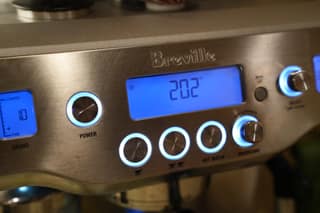
We are honest in our Oracle review that even an automatic machine gives an occasional off shot. Once the dose and tamp are locked down, that comes down to the beans changing, and one click on the grind fixes it.
Quick Reference
| Symptom | Likely cause | First fix |
|---|---|---|
| Sour, fast | Under-extracted | Grind finer |
| Bitter, slow | Over-extracted | Grind coarser |
| Too fast, weak | Light dose or coarse grind | Weigh the dose, then grind finer |
| Too slow, choked | Heavy dose or fine grind | Check dose, then grind coarser |
| Sprays, side drips | Channeling | Level and tamp straight |
| No crema | Stale beans | Fresh beans |
| Watery | Yield too long | Stop at 36–40 g |
| Varies daily | Dose, tamp, or bean age | Weigh, same tamp, click finer as beans age |
More Coffee Guides
Frequently asked questions
Why is my espresso sour?
It is under-extracted. The water went through too fast and did not pull enough from the coffee. Grind finer. If the shot was also fast, that confirms it. If the machine is not fully hot, that causes sour shots too.
Why is my espresso bitter?
It is over-extracted. The water stayed in the coffee too long and pulled out the harsh end. Grind coarser. If the shot was also slow, that confirms it. Very dark roasts are bitter at any setting; try a shorter yield.
Why does my espresso have no crema?
Stale beans, almost always. Crema is carbon dioxide from roasting, and it leaves the beans within a few weeks of the roast date. A coarse grind and a cold machine reduce crema too, but fresh beans are the fix nine times out of ten.
Why does my espresso come out too fast?
The grind is too coarse, the dose is too light, or the puck channeled. Check the dose first, then grind finer. If it sprays from one spot, the tamp or distribution was uneven.
Why is my espresso inconsistent from shot to shot?
Something is changing between shots: the dose, the tamp, or the beans aging. Weigh every dose, tamp the same way, and expect to adjust the grind a click as the bag gets older.


