


On this page
Espresso has a vocabulary that assumes you already know it. This is the list we wish we had when the Breville Oracle arrived: every term we use in our coffee guides, defined plainly, with a photo of the real thing.
The Hardware
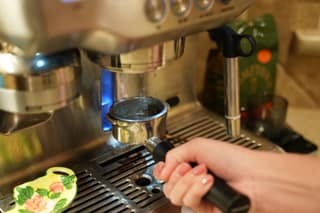
Portafilter
The handled metal holder that carries the coffee basket. You fill it, tamp it, and lock it into the machine. Most machines use a 58 mm size; the Oracle does.
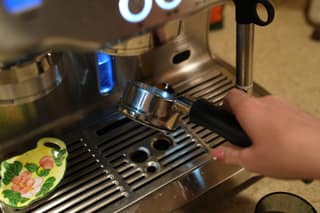
Basket
The removable, perforated metal cup inside the portafilter that holds the ground coffee. Baskets come in single and double sizes and in pressurized and non-pressurized versions. Non-pressurized is what most serious machines use.
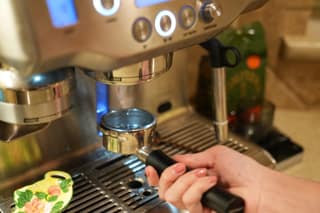
Group Head
The part of the machine the portafilter locks into. Water comes out of it through a shower screen and into the coffee. On the Oracle it is heated so the temperature holds steady.
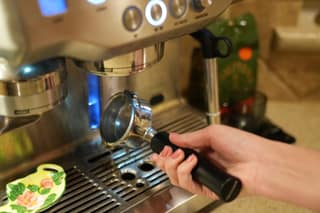
Bottomless Portafilter
A portafilter with no bottom or spouts, so the basket is exposed underneath and you can watch the shot come out. Also called a naked portafilter. We use one; our bottomless portafilter guide explains why.
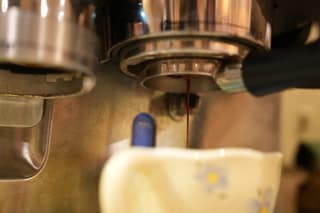
Tamper
The flat-bottomed tool used to compress the grounds in the basket. It should match the basket diameter closely.
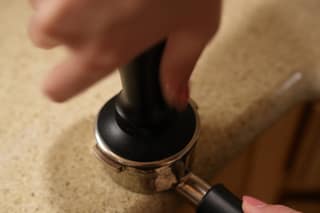
Hopper
The bean container on top of the grinder. The Oracle's holds about half a pound. We keep ours nearly empty and single dose instead.
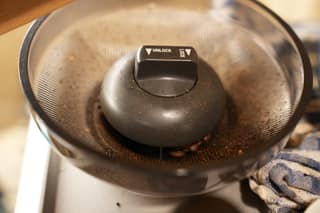
Steam Wand
The metal arm that injects steam into milk to heat and texture it. The Oracle's is automatic: set a temperature and foam level and it stops itself.
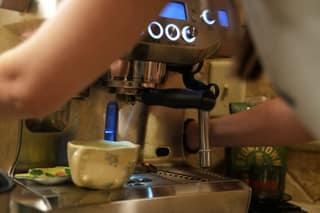
Knock Box
A bin with a bar across it for knocking spent pucks out of the portafilter.
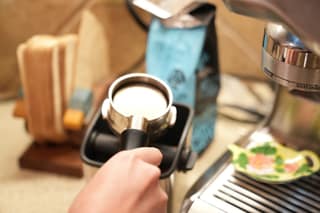
Drip Tray
The removable tray under the group head that catches drips, flush water, and the occasional spray. It needs emptying more often than you expect.
The Coffee
Dose
The weight of ground coffee in the basket. We use 18 grams for a double. Weighing it is the foundation of consistent shots; see our espresso ratio guide.
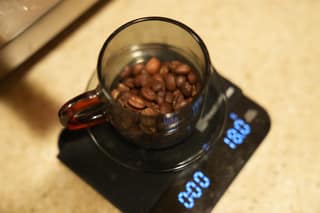
Grind Setting
How finely the grinder cuts the beans. Finer slows the shot; coarser speeds it up. The Oracle's dial runs 1 to 45; ours sits at 10.
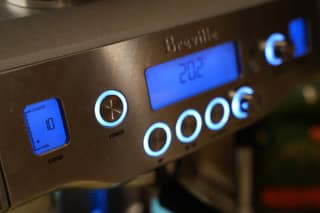
Puck
The compressed disc of ground coffee in the basket after tamping, and the spent disc that comes out after the shot.
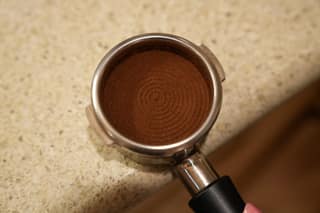
Tamping
Pressing the grounds into a level, compressed puck so water flows through evenly. Our tamping guide covers it step by step.
Distribution
Spreading the grounds evenly in the basket before tamping. A finger across the top does it. Uneven distribution causes channeling no matter how good the tamp.
Yield
The weight of liquid espresso in the cup. Ours is 36 to 40 grams from an 18-gram dose.
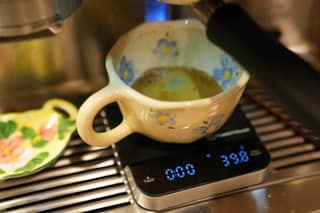
Brew Ratio
Dose to yield. 18 grams in and 36 out is 1:2, the standard. Shorter is a ristretto, longer is a lungo.
Shot Time
Seconds from pump start to target yield. About 25 to 30 is typical for a 1:2 shot. It is a diagnostic, not a goal.
Crema
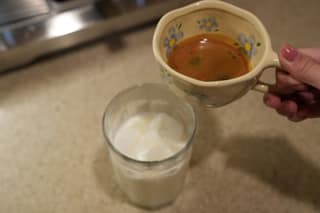
The tan foam on top of a fresh shot: carbon dioxide from the beans emulsified with oils under pressure. Thick crema means fresh beans. Thin or absent crema means stale ones.
Dialing In
Adjusting the grind until a shot with a fixed dose and ratio runs in the right time and tastes right. Our dial-in guide is the method.
Channeling
Water finding a weak path through the puck instead of flowing through all of it evenly. The shot sprays or runs fast and tastes sour. Caused by uneven dose, tilted tamp, or too coarse a grind.
Under-Extraction and Over-Extraction
Under-extracted espresso had too little pulled from the coffee: fast, sour, thin. Over-extracted had too much: slow, bitter, harsh. The grind is the usual fix for both; our troubleshooting guide matches each symptom to its fix.
Ristretto, Normale, Lungo
Short, standard, and long shots. Roughly 1:1.5, 1:2, and 1:3 ratios from the same dose. Ristretto is sweeter and more concentrated; lungo is thinner and more bitter.
The Machine
Pre-Infusion
A few seconds of low-pressure water at the start of the shot that wets the puck before full pressure arrives. It helps the water flow evenly. The Oracle does it automatically.
Pump Pressure and Extraction Pressure
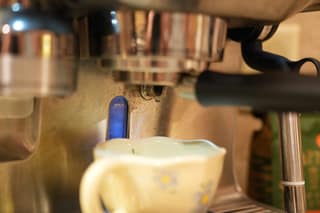
Pumps are rated at 15 bars or more, but espresso is extracted at about 9. The higher number is the pump's capability; a valve limits what reaches the coffee.
PID
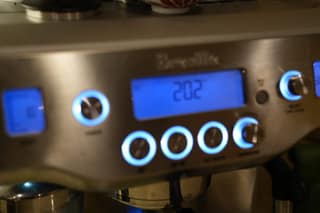
A temperature controller that holds the boiler within a degree of the set point instead of cycling above and below it. It is why the Oracle's display sits steadily at 202°F.
Dual Boiler
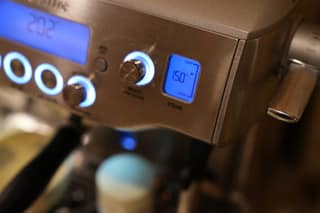
One boiler for brewing, a separate one for steam. You can pull a shot and steam milk at the same time, and each stays at its own temperature. A single-boiler machine has to heat up between the two jobs.
Heat Exchanger
The other way to brew and steam at once: a single steam boiler with a tube of brew water running through it. Common on mid-range machines; the Oracle uses dual boilers instead.
Flush
Running water through the empty group head to clear the shower screen and bring the temperature to the right spot before a shot.
Backflush
A cleaning procedure that forces water and cleaner backward through the group head using a blind basket or disc. The Oracle prompts for it as part of its cleaning cycle. See our cleaning routine.
Descaling
Removing mineral scale from the boilers and lines. Frequency depends on water hardness; the Oracle tracks use and prompts you.
Single Dosing
Weighing the beans for one drink and grinding only those, rather than keeping the hopper full. We do this on every shot.
The Drinks
Espresso
A double shot, about 36 to 40 grams from 18 grams of coffee, served on its own.
Latte
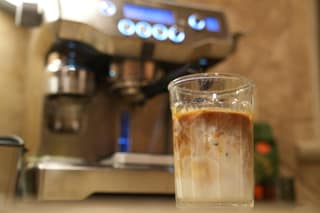
A double shot with several times its volume of steamed milk and a thin layer of foam. Iced: cold milk over ice with the shot poured on top. Our latte page covers the ratios and variations, and our latte guide is the how-to.
Cappuccino
Equal parts espresso, steamed milk, and foam in a small cup. Stronger and lighter than a latte.
Flat White
A double shot with silky microfoam in a small cup and almost no foam cap.
Cortado
A double shot with an equal amount of lightly steamed milk. About four ounces.
Americano
A shot with hot water added. The Oracle's hot water button is for this.
More Coffee Guides
Frequently asked questions
What is the difference between a portafilter and a basket?
The portafilter is the handle and holder. The basket is the removable metal cup with holes that sits inside it and holds the coffee. You tamp into the basket and lock the portafilter into the machine.
What does dialing in mean?
Adjusting the grind size until a shot with a fixed dose and ratio runs in the right time and tastes balanced. It usually takes two or three shots when you open a new bag of beans.
What is crema?
The tan foam on top of a fresh espresso shot. It is carbon dioxide from the roasted beans emulsified with coffee oils under pressure. Fresh beans make thick crema; stale beans make little or none.
What is channeling in espresso?
Water finding a weak path through the coffee puck instead of flowing evenly through all of it. It causes sour, fast, uneven shots. Causes include an uneven dose, a tilted tamp, or a grind too coarse.
What is a dual boiler espresso machine?
A machine with one boiler for brewing and a separate one for steam. It can pull a shot and steam milk at the same time, and each boiler holds its own temperature. Single-boiler machines have to switch between the two.


