


On this page
The pool in the photo was green enough that I could not see the floor. I had dealt with water like this before, and several pool companies either quoted more than $1,000 for the cleanup or did not want the job.
When this pool started turning green, I documented the recovery instead of hiding the mess. Before I learned this process, an algae bloom felt like a chemical guessing game. It is much easier to manage when I break it into four jobs: remove the debris, test the water, correct a high pH, and maintain enough chlorine while the pump and filter do their work.
A pool can look much better after 24 hours, but I would not promise crystal-clear water that quickly. A heavy bloom often needs two or three days of brushing and filtration after the algae dies.
Keep everyone out of the pool during the cleanup. Do not swim until the water is clear enough to see the entire floor, the pH is back in range, and the chlorine level meets the product label and local guidance.
What You Need
The Essentials
- A working pump and filter: The treatment has to circulate, and the dead algae has to go somewhere.
- A reliable drop test kit: Use one that measures free chlorine, combined chlorine, pH, total alkalinity, and cyanuric acid (CYA). A FAS-DPD chlorine test is especially useful because it can read the higher chlorine levels used during an algae cleanup.
- Unstabilized liquid chlorine: Liquid chlorine raises free chlorine without adding more CYA. Check the concentration on the label because products are sold at different strengths.
- Pool acid or pH reducer, if the pH is high: The amount depends on the current pH, total alkalinity, pool volume, and product strength.
- A pool pole, leaf net, and brush: Removing leaves and breaking algae loose from the walls makes the chlorine's job easier.
- Gloves and splash goggles: Use the protective equipment listed on each chemical label.
Chlorine tablets are useful for slow routine chlorination when the CYA level allows them. They dissolve too slowly to be the main treatment for a green pool, and stabilized tablets add CYA every time they dissolve.
The Tools That Save Me Time
- Ondilo ICO pool monitor: My ICO tracks pH, ORP, and water temperature and sends alerts to my phone. It helps me spot a change early, but it does not measure free chlorine or CYA, so I still use a drop kit during a cleanup. The monitor is also available on Ondilo's official site.
- Dolphin Premier robotic pool cleaner: Mine handled the floor, walls, leaves, and fine debris for more than four years. I prefer a corded cleaner because I can run repeated cycles without stopping to charge it. See the current Dolphin Premier listing.
- Betta SE robotic skimmer: The Betta catches leaves and pollen before they sink. That reduces the organic load the chlorine and bottom cleaner have to handle. See the Betta SE product page.


A robotic cleaner is optional. It can remove debris and dead algae, but it cannot fix the water chemistry. Before putting any cleaner or monitor back into treated water, check the manufacturer's allowed chlorine and pH ranges.
Pool Chemical Safety
Never mix acid and chlorine. Do not combine them in a bucket, feeder, skimmer, or the same area of the pool. Mixing chlorine products with acid can release toxic gas.
Read each label before opening the container, work outdoors and upwind, wear the listed protective equipment, and add only one chemical at a time. Pre-dissolve a chemical only when its label tells you to. When pre-dissolving is required, add the chemical to water, never water to the chemical.
I add each product separately with the pump running, let it circulate, and retest before adding the next one. In my pool, that usually means at least 30–60 minutes between acid and chlorine; the product label may require a longer interval. The CDC's pool chemical safety guidance covers the same precautions.
Step 1: Remove Debris, Brush, and Start the Filter
I remove as much physical debris as I can before reaching for chemicals. Leaves, sticks, and other organic material consume chlorine, block circulation, and fill the filter.
- Scoop out floating and sunken leaves with a net.
- Empty the skimmer and pump baskets.
- Brush the walls, floor, steps, ladders, corners, and other low-circulation areas.
- Start the pump and run it continuously during the cleanup.
- Clean the filter whenever its pressure or flow indicates that it is loading up.
Algae forms a layer on pool surfaces. Brushing tears through it and exposes more of the growth to chlorine. I brush at the start and at least once a day until no green patches remain.
Filter maintenance depends on the system. I backwash a sand or DE filter according to its pressure gauge and manual, adding fresh DE after a DE backwash. I rinse a cartridge when the pressure rises or the return flow falls. During a bad bloom, that may be once or more each day.
If I use a robot, I remove the bulky leaves first so they do not choke its filter. I also wait until the water is within the cleaner's published chemistry limits. The Dolphin Escape I tested in this green pool collected the material that settled, but the chlorine and circulation killed the algae.

Step 2: Test the Water
Testing decides what I add. I do not calculate a chlorine dose from the color of the water or from ORP alone.
These are the readings I need:
- pH: Before raising the chlorine, I target about 7.2–7.4. Chlorine works less efficiently as pH rises, and very high chlorine can interfere with some pH tests, so I handle pH first.
- Free and combined chlorine: Free chlorine is the sanitizer available to work. The treatment target depends on the pool's CYA level and the chlorine product label.
- Cyanuric acid: CYA protects chlorine from sunlight, but too much reduces its sanitizing speed. If CYA is very high, partial water replacement may be more practical than adding more chlorine. Check local water-discharge rules before draining.
- Total alkalinity: This affects how much acid is needed and how resistant the pH is to change.
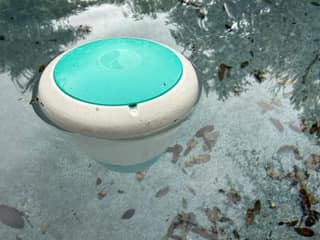
My ICO may show a low ORP reading during an outbreak. As the cleanup works, I expect ORP to climb back toward my pool's established clean-water range, often around or above 650 mV. I treat that as a trend, not a chlorine dose. pH, CYA, temperature, and other conditions all affect ORP.
Step 3: Lower a High pH
If the pH is already around 7.2–7.4, I skip this step. Acid is not something I add automatically.
When the pH is high, I calculate the acid dose from:
- The pool's actual water volume
- Current and target pH
- Total alkalinity
- The concentration and type of acid
I follow the product label and add the measured amount slowly to the pool with the pump running. I keep it away from the skimmer, cleaner, metal fittings, and any place where chlorine was just added. After the required circulation time, I retest instead of assuming the first dose was right.
This is why a statement such as "add half a gallon" cannot apply to every pool. The same amount can be too little in one pool and far too much in another.
Step 4: Add and Maintain Chlorine
Once the pH is in range, I calculate a liquid-chlorine dose from the pool volume, current free chlorine, CYA, and the percentage printed on the jug. I follow the label for placement and pour slowly to prevent splashing. I never pour chlorine into the skimmer or into an area that may still contain acid.
One large dose may change the color, but an algae bloom can consume chlorine quickly. I retest and bring the free chlorine back to the cleanup target as often as the test kit and product directions call for. I keep the pump running, brush daily, and clean the filter or robot after each heavy load.
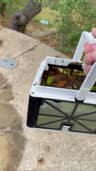
This is what the filtration stage looks like in practice: algae-filled baskets, pleated media, and a rinse after every heavy cycle.


The usual color change is green to dull gray or blue, followed by cloudy blue water. Cloudiness at that point is often dead algae suspended in the water. I vacuum it to waste when the plumbing allows, or let the filter and a fine-filter robot collect it.
Clarifier and Flocculant
I do not add either product by default.
A compatible clarifier can help the filter collect fine suspended particles, but overdosing can make the water harder to clear. Flocculant drops particles to the floor so they can be vacuumed directly to waste. It should not be pulled through a cartridge filter or robotic cleaner. I only use either product when the label matches the pool and filter setup.
What the First 24 Hours Look Like
This is the order I follow:
- Start: Remove debris, brush every surface, test the water, and start continuous filtration.
- After the pH adjustment: Allow the label's circulation time, then retest.
- After chlorine: Keep the pump running and brush again so treated water reaches the corners.
- Several hours later: Retest free chlorine and restore the treatment level if the algae has consumed it.
- The next morning: Check the color, brush, clean the filter or robot, and test again.
The dramatic change often happens in the first day. The pool may still be cloudy, which means the filtration stage is not finished. I repeat the testing, chlorine maintenance, brushing, and filter cleaning until the water is clear. I only repeat the acid step if a new test shows that the pH is high.
How I Know the Cleanup Is Finished
I look for all of these signs:
- No green patches remain on the walls, floor, steps, or corners
- The water is clear enough to see the entire pool floor
- Free chlorine holds near its normal target instead of disappearing quickly
- pH is stable in the pool's normal range, commonly 7.2–7.6
- The filter pressure and return flow are back to normal
- The ICO's ORP has returned to the baseline I see when my water is clean
I do not use appearance alone to decide that the pool is ready. Clear water can still have the wrong sanitizer level, and blue cloudy water can hide the floor.
How I Keep the Pool From Turning Green Again
- Test free chlorine and pH regularly, especially after heavy swimming, rain, or very hot weather.
- Maintain free chlorine for the pool's CYA level instead of relying only on an ORP alert.
- Use stabilized tablets only when the CYA level has room to rise.
- Run the pump long enough each day to circulate and filter the full pool.
- Brush steps, corners, and other low-flow areas every week.
- Empty the Betta, bottom cleaner, skimmer baskets, and filter before debris restricts flow.
- Confirm ICO readings with a drop kit and keep the probes calibrated.
That routine is less expensive than another full cleanup. The equipment removes the physical mess, but consistent testing and chlorine are what stop the green water from returning.
The Products Shown in This Guide
- Read my Ondilo ICO review or visit Ondilo's ICO product page.
- Read my Dolphin Premier review or see the Dolphin Premier retailer listing.
- Read my Betta SE review or visit the official Betta SE page.
- Read my Dolphin Escape review to see how its basket and NanoFilters handled this green-pool cleanup.
- See my Dolphin NanoFilters guide for the difference between coarse mesh and fine pleated filters.
Frequently asked questions
Can a green pool clear in 24 hours?
The water can change from green to blue within 24 hours when the pH, chlorine level, circulation, and filtration are right. A severe bloom may still need two or three days, or longer, before the filter removes the dead algae and the water becomes clear.
How much liquid chlorine should I add to a green pool?
The dose depends on pool volume, current free chlorine, cyanuric acid, and the strength of the liquid chlorine. Test first, then use the product label or a pool dosing calculator. A gallon amount copied from another pool can under-treat the algae or overshoot the safe range.
Can a robotic pool cleaner remove algae?
A robot can scrub surfaces and collect dead algae, but it cannot sanitize the water or correct the chemistry. Check the cleaner's manual before exposing it to an elevated chlorine level.
Should I use clarifier or flocculant?
Most green pools clear with chlorine, brushing, circulation, and filtration. Clarifier can help a compatible filter collect fine particles. Flocculant should only be used when the settled material can be vacuumed directly to waste; it should not pass through a cartridge filter or robotic cleaner.


