


The verdict · Dolphin Escape
The Escape is an easy recommendation for an above-ground or small in-ground pool when the floor is the main job. It scrubs, carries a large basket, and runs at full power for the whole cycle. It does not climb walls, and NanoFilters and scheduling depend on the package, so check what is included before buying.
What works
- Constant corded power throughout its 90-minute cleaning cycle
- The top-loading MaxBin holds far more debris than the small baskets in many compact robots
- Its active HyperBrush loosens algae and dirt instead of only vacuuming over them
- Optional NanoFilters catch fine silt, pollen, and dead algae
- At 14.2 pounds, it is easier to lift than many full-size Dolphin cleaners
What doesn't
- It cleans the floor only, not the walls or waterline
- NanoFilter panels are an extra purchase
- The standard power supply has no weekly timer
- The 40-foot cable has no anti-tangle swivel
Dolphin Escape — key specs
| Pool type | Above-ground and small in-ground pools up to 33 feet |
|---|---|
| Coverage | Pool floor only |
| Cycle | 1.5 hours |
| Filtration | Top-loading fine-filter MaxBin; optional NanoFilter panels |
| Brush | 1 active HyperBrush |
| Navigation | CleverClean smart navigation |
| Suction | 4,000 gallons per hour |
| Cable | 40 feet; no anti-tangle swivel |
| Weight | 14.2 pounds |
| Controls | Standard power supply; no app or built-in weekly timer |
| Warranty | 2 years |
| Package options | Standard MaxBin; dealer bundles may add NanoFilters or a timer supply |
On this page
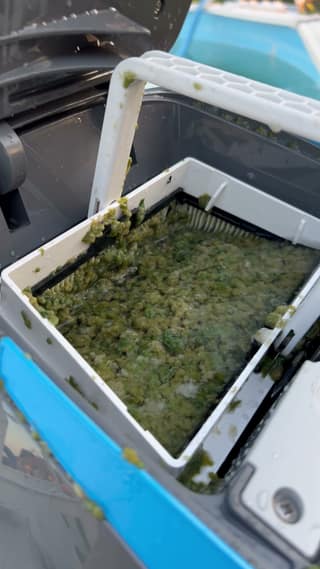
The first pool I put the Dolphin Escape in was green enough that I could not see the floor. That turned out to be a useful test. Every 90 minutes I opened the top, lifted out the MaxBin, and found another load of algae and debris waiting for the hose.
The Escape is one of Dolphin's simpler robots. It has no app, no waterline mode, and no wall climbing. What it does have is the hardware I care about on a small-pool cleaner: corded motors, an active brush, rubber tracks, and a large basket I can reach from the top.
That combination worked. The Escape did not make the chemistry problem disappear, but it removed the mess that settled after the sanitizer started killing the algae.
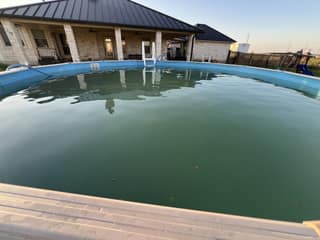
How It Handled a Green Above-Ground Pool
I ran the Escape several times during the cleanup. Each cycle pulled up a mix of algae, grit, and loose debris from the floor. The powered brush broke up material that a suction-only cleaner might roll over, then the intake carried it into the bin.
A robot cannot fix an algae bloom by itself. Green water still needs the right sanitizer level, circulation, and balanced chemistry. The Escape handles the physical cleanup: it removes the dead algae and debris left on the floor so that material does not keep cycling through the pool.
That distinction matters, but so does the amount of work it saved. Once the water chemistry started doing its job, I did not have to stand over the pool with a manual vacuum. I rinsed the bin, put the robot back in, and started another pass.
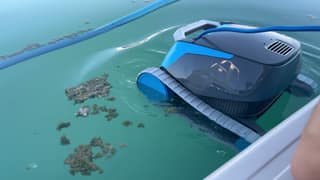
Why I Prefer Corded Power
I tried several cordless pool cleaners before the Escape. Some cleaned well, but every one eventually had to come out for charging. During a multi-cycle cleanup, that break gets old fast.
The Escape's cable is less tidy, but the motor receives steady power for the full 90-minute cycle. There is no battery percentage to check, no charging break between cycles, and no lithium battery losing capacity after repeated summers outside.
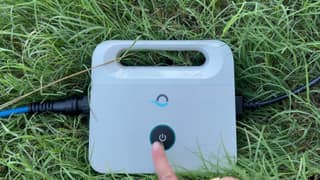
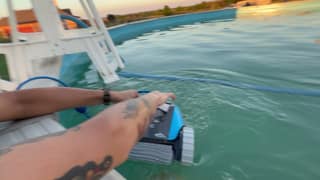
Its power supply plugs into a GFCI-protected outlet and sends low-voltage power to the robot. I press one button and the Escape runs until the cycle ends. The 40-foot cable is long enough for the pools this robot is designed to clean, although it does not have the anti-tangle swivel found on some pricier Dolphins. I lay out only the cable the pool needs and straighten it before a cycle.
For me, a minute spent straightening the cable is a better trade than lifting a wet robot out after every run.
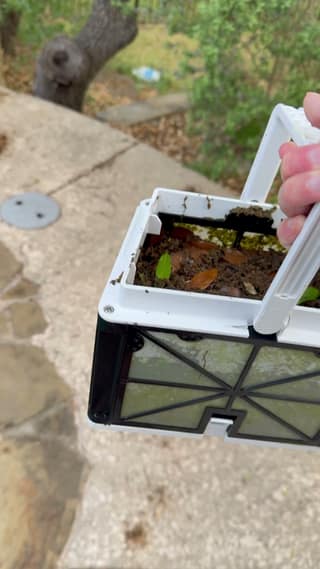
MaxBin Capacity and Cleanup
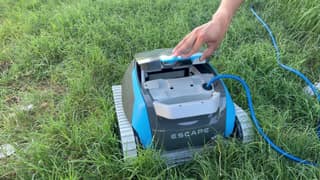
The MaxBin is the Escape's best everyday feature. I open the lid and pull the whole basket straight up. There is no need to flip the robot over, unclip a pair of cartridges, or dig into a fabric bag.
The bin held the larger debris from my test along with a thick layer of algae and dirt. Its open interior also made it easy to see when it needed cleaning. During a heavy cleanup, I rinsed it after each cycle; under normal conditions, the right interval depends on how many leaves and other debris reach the pool.
The standard panels are useful for leaves, insects, and ordinary dirt. They rinse quickly and keep the water moving through a heavy debris load. They are not the best choice for the fine powder left by dead algae.
The NanoFilter Upgrade Was Worth Buying
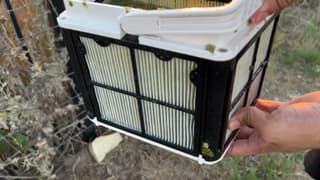
I bought the optional NanoFilter panels, and they are the upgrade I would buy again. The pleated media caught the silt and dead algae that passed through the standard mesh and settled back onto the floor.
During the green-pool cleanup, that finer filtration mattered. The debris inside the pleats showed what the standard filter had been missing. The water also looked more polished after repeated cycles because less fine material returned through the exhaust.
NanoFilters come with one cost besides their purchase price: rinsing takes longer. Fine debris packs into the pleats, so I had to spray between them instead of giving the basket a quick rinse. For a pool that mainly collects larger leaves, the standard MaxBin may be enough. For algae, dust, sand, or heavy pollen, I would budget for the upgrade.
Some listings call this the Gen-2 MaxBin. The useful distinction is simpler: every Escape comes with a reusable basket, but the pleated panels may be an add-on or part of a dealer bundle.
HyperBrush Scrubbing
Many small pool vacuums rely on suction while a passive brush drags along the floor. The Escape's front brush has its own drive and spins faster than the robot moves. Dolphin calls it the HyperBrush.
That rotation is useful on stuck-on dirt and algae. In the green pool, I could see a cleaner strip behind the robot as the brush broke material loose and the intake pulled it into the bin. It still took multiple cycles to cover a neglected pool, but I did not have to brush the entire floor by hand first.
The Escape has one active brush rather than the two-brush layout on larger cleaners. For a floor-only robot, it was enough to leave a visible path through the algae without making the body harder to lift.
HyperGrip Tracks and Pool Coverage
The Escape rides on continuous rubber HyperGrip tracks rather than four small wheels. The tracks create a broad contact patch on vinyl, fiberglass, plaster, and other common pool surfaces. They also help the robot change direction without wasting as much movement on wheelspin.
CleverClean navigation guides the Escape around rectangular, round, kidney-shaped, and freeform pools. It does not map the pool in an app, and there is no manual remote control. It simply runs its programmed route for 90 minutes.
Coverage was good where the Escape is designed to work: the floor. It may ride partway up a curved transition, but I would not count that as wall cleaning. It will also miss steps, benches, and shallow ledges. I brush those areas toward the floor before I start it.
The Weekly Timer Is an Optional Upgrade
The standard Escape does not have a weekly timer. Maytronics lists scheduling and automation as unavailable on the stock model.
Some specialty dealers bundle the Escape with a compatible timer-equipped power supply. That supply can start the robot on a schedule, but it is not a feature built into the cleaner. The stock one-button supply in my photos has no timer.
Check exactly which power supply a listing includes before comparing prices. A lower-priced Escape may include the normal one-button supply, while a more expensive bundle may add both the timer and NanoFilters.
What Comes in the Box
The standard package includes:
- The Dolphin Escape robot
- A 40-foot floating cable
- A basic one-button power supply
- The top-loading MaxBin with standard fine-filter panels
- The operating instructions
NanoFilter panels, a timer-equipped power supply, and a caddy are not guaranteed parts of the standard package. At 14.2 pounds, I do not think the Escape needs a caddy for most small pools. The handle is enough for the short trip between the water and storage.
Is the Dolphin Escape Worth It?
The Escape makes sense when the pool is small enough for its cable and floor cleaning is the main job. Most of the money goes toward useful hardware: corded motors, active scrubbing, tracked propulsion, navigation, and a large reusable basket.
It is a weaker fit if you want one robot to scrub the floor, walls, and waterline. Adding NanoFilters and a timer-equipped power supply also narrows the price gap between the Escape and more capable models. Compare the full bundle price, not only the base robot.
For my above-ground test pool, the Escape's limits were easy to accept. Above-ground walls and top rails are not areas I expect a floor robot to clean, and constant power mattered more to me than an app. The Escape did the hard part well: it scrubbed and collected what had settled on the bottom.
Comparable Dolphin Robots
| Robot | Best fit | Main reason to choose it over the Escape |
|---|---|---|
| Dolphin Explorer E30 | Larger in-ground pools | Adds wall and waterline coverage |
| Dolphin Nautilus CC Pro | Owners who want broader coverage and app scheduling | Adds wall climbing and connected controls |
| Dolphin Premier | Heavy leaves, fine debris, and long-term automation | Interchangeable filter media, waterline cleaning, and a built-in weekly timer |
The E30 and Nautilus CC Pro are better choices when wall and waterline cleaning are required. The Premier costs much more, but its oversized leaf bag, NanoFilters, anti-tangle swivel, and three-year warranty are aimed at larger and more demanding pools.
Cordless cleaners remain an option where a cable cannot reach safely. I would choose one only if getting rid of the cable matters more than charging between cycles.
Where to Buy
Escape bundles vary more than they first appear. One retailer may list the base robot, another may include NanoFilters, and another may pair it with a timer power supply. I would confirm the filter panels and power supply in the box before comparing prices.
The dealer buttons in the verdict above point to Escape listings from PoolRobots, PremierRobotic, QuantumRobotic, and Poolbots. I kept every outbound buying link in this review on those retailer sites.
Final Thoughts
The Escape is not trying to be Dolphin's most advanced robot. It has no app, no wall climbing, no waterline mode, and no timer on the basic supply. Its appeal is that the cleaning hardware works.
I watched the brush cut a path through algae, pulled a heavy load from the MaxBin, and sent the robot back in without waiting on a battery. NanoFilters made the biggest difference once the remaining debris was fine enough to pass through mesh.
For an above-ground or small in-ground pool, this is the Dolphin I would start with. Add NanoFilters if the pool gets fine dust, pollen, or dead algae. Pay for a timer bundle only if you will use it, and move up to a wall-climbing model if the floor is not enough.
Frequently asked questions
Does the Dolphin Escape clean pool walls?
No. Maytronics rates the Escape for floor cleaning only. It may ride slightly up a curved transition, but it is not designed to scrub walls or the waterline.
Can the Dolphin Escape clean an in-ground pool?
Yes. Current dealer listings rate it for both above-ground and in-ground pools up to 33 feet long. It makes the most sense in a smaller pool where floor cleaning is the priority.
Does the Dolphin Escape include NanoFilters?
No. The standard MaxBin uses fine filter panels. Pleated NanoFilter panels are an optional upgrade for smaller particles such as silt, pollen, and dead algae.
Does the Dolphin Escape have a weekly timer?
Not with its standard power supply. Some dealers sell the Escape in a bundle with a compatible timer-equipped power supply, but scheduling is an add-on rather than a built-in feature.


