


On this page
Where to buy
Read the full reviews
The Dolphin Escape and Cayman look close enough that it is tempting to treat the Cayman as an Escape with two options switched on. Their dimensions are nearly identical, both weigh about 14 pounds, and Maytronics gives both an active brush, tracked drive, top-access filtration, and a listed 4,000-GPH suction rate.


The two additions on the Cayman are not minor, though. It climbs walls and its power supply can start cycles on a weekly program. The Dolphin Escape stays on the floor and waits for someone to press its start button before every run.
I used the Escape through repeated cycles in a green above-ground pool. I used the Dolphin Cayman for more than a month and watched it climb the walls of a neglected above-ground pool. I did not run a controlled side-by-side cleaning test between these two, so I would not claim one vacuums the floor better. The buying decision rests on coverage, scheduling, and the price in your cart.
Current specifications, without the dealer shorthand
| Specification | Dolphin Escape | Dolphin Cayman |
|---|---|---|
| Maytronics model | 99996153-SPLF | 99996135-SPL |
| Current pool classification | In-ground and above-ground | In-ground and above-ground |
| Maximum pool length | 30 feet | 40 feet on Maytronics' U.S. page |
| Rated coverage | Floor | Floor and walls |
| Waterline scrubbing | No | No |
| Default cycle | 1.5 hours | 2 hours |
| Brush | One active brush | One active brush |
| Listed suction rate | 4,000 GPH | 4,000 GPH |
| Filter access | Top | Top |
| Standard filter | Fine filter kit | Fine filter kit |
| Weekly timer | No | Yes |
| App or remote | No | No |
| Cable swivel | No | No |
| Robot weight | 14.2 pounds | 14.6 pounds |
| Warranty | 2 years | 2 years |
| Maytronics price on October 1, 2026 | $799 | $1,129 |
| Common authorized-dealer price on October 1, 2026 | About $669 | About $1,079 |
Some Cayman sellers still publish a 33-foot limit while Maytronics's current U.S. page says 40 feet for the model above. If your pool is near either limit, confirm the model and cable specification on the box rather than relying on a category page.
The official price gap was $330 on October 1, 2026. Discounted dealer pricing widened it to about $410. An Escape bundle with pleated filters or a timer supply can narrow the gap, while a Cayman bundle with an extra ultra-fine basket can widen it.
Their common hardware is the reason to consider the Escape
The Escape does not give up the useful basics. Its front brush is actively driven rather than simply rolling along with the tracks. The filter lifts through the top, and the whole cleaner weighs 14.2 pounds before it goes into the water.
During the green-pool cleanup, the Escape left visible paths through settled material and returned with algae and dirt in the basket. It took several cycles. More important, the chemistry had to be corrected before the robot could remove the dead material. No robotic cleaner kills algae or replaces the pool filter.

The Cayman has the same listed suction rate and the same basic active-brush idea. Its extra half hour gives it time to leave the floor, climb walls, and return to the bottom. Pool shape, obstacles, filter loading, and finish still affect what either robot reaches in one cycle.
Neither model maps the pool in an app. Maytronics's CleverClean program handles the route inside the robot. There is no live map, manual steering, or way to point it at a missed patch.
If you plan to start the robot yourself and brush the walls anyway, the Cayman offers little extra help on the floor. The Escape keeps nearly all of the hardware used there.
The Cayman climbs walls, not the waterline
The Cayman repeatedly drove from the floor onto the wall in my above-ground test pool. Its tracks carried it until the front of the cleaner broke the surface, then it descended and resumed its route.

That is useful wall cleaning. It is not waterline cleaning.
Maytronics marks waterline scrubbing “No” for the Cayman. It does not remain at the surface and travel sideways along a tile band. If sunscreen and pollen leave a ring at the waterline, plan to brush it or buy a model specifically rated for that job.
The Escape is easier to understand. It cleans the floor. It may put its nose onto a curved transition, but that movement should not appear on a shopping list as wall coverage.
Wall climbing earns its keep when dust or algae film builds on the vertical finish and manual brushing is a regular chore. It matters less in an above-ground pool whose smooth walls stay clean while debris settles on the bottom. Neither cleaner can work behind a ladder, sit securely on a narrow step, or cover every shallow ledge.
The timer changes how often you have to walk outside
The stock Escape supply has a power button, not a schedule.
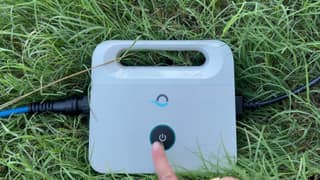
Press it once and the Escape runs for 90 minutes. When it stops, the next cycle waits for another press. There is no app, delayed start, or weekly program on the standard model.
Some dealers package the Escape with a compatible timer supply. That may be a useful bundle, but it does not change the specification of the basic Maytronics package. Confirm the pictured supply and included-parts list before paying extra.
The Cayman power supply has a weekly timer:
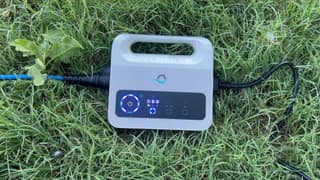
- One press schedules seven daily cycles.
- Two presses schedules four cycles, one every other day.
- Three presses schedules three cycles, one every third day.
Each run lasts two hours. After the programmed week, the supply turns off and you have to choose the schedule again. This is useful physical automation, not an indefinite calendar. There is no phone notification when the basket fills, either.
I like resetting the program when I rinse the filter. During a heavy cleanup, I ignore the weekly interval and check the basket after every cycle. A timer cannot compensate for a packed filter.
Filter upkeep is similar, but check what comes in the box
Both cleaners have top access. Open the cover, lift the basket by its handle, open the bottom, dump the debris, and rinse the filter surfaces. That routine is much easier than turning over a wet robot to reach a bottom plate.

Maytronics lists a fine filter kit as standard on both current product pages. Fine media handles leaves, bugs, and ordinary dirt with less rinsing. Compatible ultra-fine options make more sense for pollen, silt, fine sand, and dead algae. Dealers may call the pleated upgrade a NanoFilter basket or sell it as a second set.
I would not describe the included filters as identical without checking the two listings. Maytronics offers different replacement parts and dealers assemble different bundles. One low price may include only the standard basket; another may add panels, a second basket, or a different supply.
Pleated media needs a slower hose rinse between the folds. It also loads faster in a dirty pool. Restricted flow can reduce pickup and make a wall-climbing robot less willing to climb, so the Cayman's extra coverage depends on keeping its filter clean.
Handling and cord care are nearly a tie
At 14.2 and 14.6 pounds dry, the Escape and Cayman feel like the same weight in ordinary use. Bring the robot to the wall with the floating cable, let it drain at the surface, then lift it by the handle. Do not use the cable as a lifting rope.
Neither model has an anti-tangle swivel. Put only the needed length in the water, remove twists after a run, and store the cable in loose coils. A non-swivel cable is manageable in a small pool, but neither cleaner eliminates cord handling.
Maytronics currently classifies both for above-ground and in-ground pools. The Escape's 30-foot limit makes it the small-pool option. The Cayman page allows up to 40 feet and gives the larger pool a longer cycle, but stairs, drains, sharp transitions, and cable placement still affect coverage.
The Cayman premium buys features, not a longer warranty
Both robots carry a two-year Maytronics warranty. Paying more for the Cayman does not add coverage or an app. The money goes mainly toward wall climbing, the weekly-timer supply, and suitability for a longer pool.
At manufacturer prices, those additions cost $330. At the common dealer prices I found, they cost about $410. That is a reasonable premium only if you will use one or both of them.
Price comparisons get messy around these models. Before ordering, check:
- the Maytronics model number;
- standard versus ultra-fine filter media;
- the exact power supply;
- new, open-box, or refurbished condition;
- authorized-dealer status; and
- the written warranty and return terms.
A $768 Escape bundle with fine filtration and a timer may be a better fit than a bare Escape, but it also changes the comparison with the Cayman. Compare complete packages.
My pick depends on the wall brush in your hand
Buy the Dolphin Escape if the pool is 30 feet or shorter, the floor is the main collection area, and pressing start before each run is no burden. It is also the better choice when low purchase price matters more than scheduled starts.
Buy the Dolphin Cayman if wall brushing is already on your weekly list, or if automatic starts will make the cleaner run more consistently. It is the only choice between these two for a 31- to 40-foot pool under Maytronics's current U.S. limits.
Skip both if you require waterline travel, app control, remote steering, or a cable swivel. The Cayman costs more because it does two specific jobs the Escape cannot. If those jobs do not happen in your pool, keep the difference and buy the Escape.
More comparisons with these products
- Clear UV vs. Dolphin Cayman: Is the Waterline Worth $870? Clear UV and Dolphin Cayman compared on waterline cleaning, filters, lifting weight, scheduling, UV claims, warranty, and the current $870 price gap.
- Clear UV vs. Dolphin Escape: Start With the Pool A practical Clear UV and Dolphin Escape comparison covering pool compatibility, coverage, filters, lifting weight, controls, warranty, and ownership cost.
- Dolphin Cayman vs. Nautilus CC Plus: The Price Gap Matters Dolphin Cayman vs Nautilus CC Plus compared by model number, cleaning coverage, filters, weight, controls, warranty, and current price.
- Dolphin Escape vs. Nautilus CC Plus: Floor-Only or Wall-Climbing? Dolphin Escape vs Nautilus CC Plus compared on floor and wall coverage, pool size, filters, lifting weight, Wi-Fi, warranty, and price.
- Dolphin Premier vs. Cayman: Leaf Bag or Easier Basket? An owner comparison of the Dolphin Premier and Cayman covering leaf capacity, filter access, waterline cleaning, brushes, weight, timer, warranty, and price.
- Dolphin Premier vs. Escape: Two Different Pool-Cleaning Jobs A practical Dolphin Premier vs. Escape comparison covering pool fit, cleaning limits, filters, maintenance, scheduling, warranty, and current pricing.
All comparisons Best Robotic Pool Cleaners All robotic pool cleaners
Frequently asked questions
Does the Dolphin Escape climb walls like the Cayman?
No. Maytronics rates the Escape for floor cleaning only. It may drive partway into a curved cove, but the Cayman is the model rated for floor and wall coverage.
Do both cleaners have a weekly timer?
No. The standard Escape has a one-button supply and must be started for each 90-minute cycle. The Cayman supply can start a two-hour cycle daily, every other day, or every third day for one week. The Cayman schedule then needs to be selected again.
Do both cleaners use the same filter basket?
Both have a handled, top-access fine-filter basket and both have compatible ultra-fine options, but package contents and replacement assemblies vary by listing. Do not assume that an Escape and Cayman offer includes the same basket or pleated media; check the included-parts list.
Can both cleaners be used in above-ground pools?
Maytronics currently classifies both U.S. models for above-ground and in-ground pools. The Escape is limited to 30 feet on its current product page. The current Cayman page says 40 feet, although some dealer listings still say 33 feet.
How much more does the Cayman cost?
On October 1, 2026, Maytronics listed the Escape at $799 and the Cayman at $1,129, a $330 gap. Common authorized-dealer prices were about $669 and $1,079, a $410 gap. Filters, timer bundles, sales, and open-box status can change the actual difference.


