


On this page
A deep-bag leaf rake works because water passes through the mesh while leaves stay behind. Most spills happen when the frame changes direction, the bag is overfilled, or the mouth points down during the lift.
The basic motion is simple: mouth first, bag behind, opening up before lifting.
Start With a Rake That Will Not Damage the Pool
A flat skimmer net is meant for light surface work. A leaf rake has a deeper pocket and a scoop edge that can collect wet leaves from the floor.
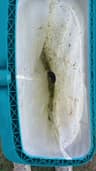
Before attaching it to the pole, run a hand along the dry frame. Look for torn mesh, split plastic, exposed wire or screws, and a loose pole clip. Replace a damaged rake instead of covering a sharp spot with tape that can peel off underwater.
Vinyl needs a rake made for vinyl pools, usually with a smooth rubber or molded-plastic edge. The guard matters more than the color or bag depth. A hard exposed frame can mark or puncture a liner.
Choose the mesh for the job. Coarse mesh moves through water with less drag and drains quickly, which suits ordinary leaves. Fine mesh catches smaller debris but is harder to push and becomes heavy sooner.
Learn the Motion in Open Water
Before working on the floor, make one pass away from walls and fittings:
- Put the open face of the frame in the direction of travel.
- Move slowly enough for water to pass through the bag.
- Near the end of the pass, roll the pole so the opening faces up.
- Keep that orientation while lifting and draining.
Think of the bag as a pocket trailing behind the frame. If the bag leads, folds across the opening, or flips over the top, the rake will push leaves away instead of collecting them.
Extend the pole only as far as needed. A shorter pole gives better control and puts less strain on wrists and shoulders.
For Floating Leaves, Stay Just Below the Surface
Set the lower rim an inch or two under the water. Start beyond the debris and make a smooth sweep with the mouth leading. Do not slap the frame down on top of the leaves; that sends them in several directions.
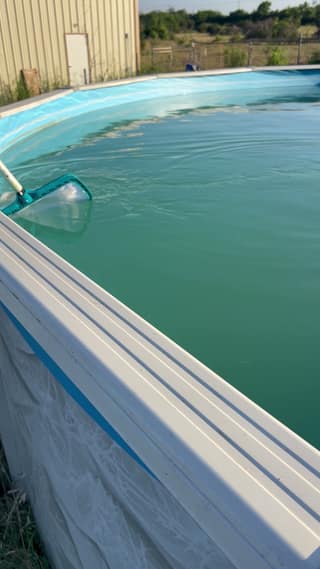
Use wind and return flow to your advantage. If leaves have collected along one wall, work that line before they spread again. Turn the opening upward before changing direction or stopping.
A flat skimmer net remains the quicker choice for a few bugs or single leaves. Use the deep bag when debris is too wet or plentiful for the flat net to hold.
On the Floor, Use the Rake Like a Dustpan
Lower the rake gently with the mouth facing the direction you plan to move. Hold the pole at a shallow angle and let the smooth scoop edge make light contact with the floor. Push forward slowly so the edge slips under the leaves and the bag follows behind it.

For broad coverage, make straight, overlapping lanes instead of stirring the pile from every direction. Slow down if the water clouds behind the frame. Fine silt passes through many leaf-rake bags and becomes harder to remove once suspended.
On vinyl, the edge should glide rather than scrape. Ease up as you cross a seam, wrinkle, cove, or ladder pad. Never jab under a pile you cannot identify. A hidden stick, piece of metal, rock, or broken toy can cut the bag and the liner. Remove a large or sharp object with a suitable grabber from the deck, or call for service if it cannot be reached safely.
Turn the Opening Up Before You Lift
Near the end of a pass, slow down and roll the pole in your hands until the opening faces the surface. That turn lets the debris fall into the deepest part of the bag.
Raise the rake without reversing the roll. Pause with the frame at or just above the surface so water can drain through the mesh.
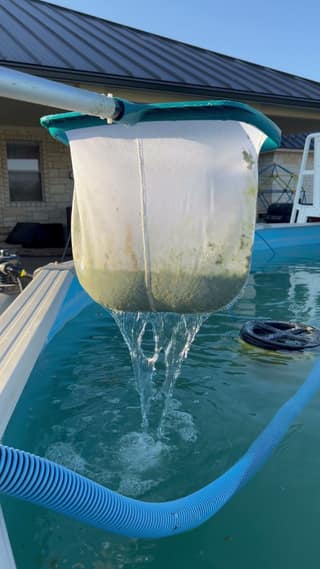
Wet leaves become heavy quickly. If the pole bows, the bag stretches, or the load is hard to control, lower it back into the water. Move closer, shorten the pole, and take out part of the load. Do not use the top rail as a fulcrum or drag the frame up the liner.
Smaller loads are faster than recovering one large load that spills across the floor.
Empty It Without Pulling on the Mesh
Carry the rake to yard waste or a trash container away from the pool edge. Use the bag's turnover tab if it has one, or tip the frame and shake it lightly.
Do not pull a wad of wet leaves through the netting. That stretches the mesh and tears the seam where the bag meets the frame. A hose can loosen fine material that remains after the larger debris is dumped.
Before putting the rake away, rinse it, check the pole clip and edge again, and let it dry out of direct sun. Replace it when the bag separates from the frame or the protective rim no longer covers the hard structure underneath.
Fix the Technique When the Rake Fights You
Leaves roll away from the frame. The mouth may not be leading, or the bag may be folded over the opening. Stop, let the bag sink and open, then begin the pass more slowly.
Debris enters and comes right back out. The frame is being reversed before the mouth is rolled upward. Finish one direction of travel, rotate the opening up, then lift.
The rake keeps pushing a thin layer across the floor. The material is probably too fine for the mesh, or the pole angle is too steep. Try a lower angle once. If the material still passes through or clouds, change tools.
The pole is hard to move. Shorten it, reduce the load, or use a coarser bag for large leaves. Forcing a fine, full bag through the water can bend the frame or pole.
Leaves keep packing into the wall skimmer while you work. The rake does not need circulation. Shut the pump down if the skimmer is filling faster than it can be monitored, and follow the safe procedure for cleaning the skimmer basket. The pump must be off and unable to restart before hands enter the housing.
Know When the Leaf Rake Is Finished
A leaf rake removes bulk debris. It is not a vacuum, filter, or algae treatment.
After the leaves are gone, use a vinyl-safe brush for attached film and a manual pool vacuum for the smaller material that settles. Fine particles left in suspension belong to the circulation filter, with filter cleaning as needed.

Green or cloudy water also needs testing and a measured treatment plan. Removing organic debris first reduces the physical load, but it does not correct the water chemistry. Follow the steps for cleaning a green pool rather than continuing to sweep fine material with the rake.
For routine care, skim leaves before they become waterlogged and check the floor during the weekly pool-maintenance routine. The sooner a leaf comes out, the lighter the bag and the less likely the debris is to end up in the skimmer or vacuum line.
Frequently asked questions
What is the difference between a pool leaf rake and a skimmer net?
A leaf rake has a deep bag for larger loads and debris on the floor. A flat skimmer net changes direction more easily and is faster for a few bugs or leaves on the surface.
Can I use a pool leaf rake on a vinyl liner?
Yes, but use a rake labeled for vinyl with a smooth rubber or plastic scoop edge. Inspect it for cracks and exposed metal before each use, then glide it lightly over the liner instead of scraping or jabbing.
Should I push or pull a pool leaf rake?
Move it in the direction that keeps the open mouth in front and the bag behind. On the floor, most leaf rakes work best when the smooth scoop edge is pushed forward like a dustpan.
Can a leaf rake remove algae?
It can lift leaves and larger clumps, but it does not kill algae or catch fine suspended material. Algae cleanup still requires testing, treatment, brushing, circulation, and filtration.
Should the pump be on while using a leaf rake?
The rake works without the pump. Keep the frame and pole away from active suction fittings. If debris is lodged in a skimmer or intake, shut the pump off and prevent it from restarting before clearing the blockage.


