


On this page
Basket cleaning is ordinary maintenance. Opening a suction line, loosening the wall fitting, or removing the faceplate is not.
The distinction matters on an above-ground pool because the skimmer is attached through the liner and pool wall. For a routine cleaning, everything you need is accessible from the top of the housing. Leave the plumbing and faceplate assembled.
Before Your Hands Go Near the Skimmer
Shut the pump off and make it unable to restart. Cancel timer schedules, disable app or automation control, and keep anyone else from operating the equipment. If those controls do not positively prevent a restart, switch off the pump's approved disconnect or circuit breaker. Follow the isolation steps in the pump manual.
Wait for the return flow and movement inside the skimmer to stop. If water is still being pulled through the opening, the correct pump is not off. Do not reach in.
This is not an extra precaution invented for this guide. Doughboy's thru-wall skimmer instructions, for example, begin the basket-cleaning procedure with “Stop pump.” Follow the instructions for the equipment actually installed at your pool.
Gather a trash or yard-waste container, a garden hose, and a soft cloth or vinyl-safe brush. Gloves are useful when the basket contains sharp twigs, stinging insects, or decaying debris.
1. Open the Lid and Look First
Remove the top cover without putting a hand into the housing. Check for bees, wasps, spiders, frogs, sharp sticks, or a broken basket handle. Skimmer manufacturers specifically warn about live stinging insects hiding in the debris.
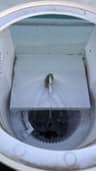
The hinged flap at the pool opening is the weir. It should swing freely. Its job is to skim a thin layer from the surface while the pump runs and help keep captured debris from drifting back out after shutdown.
2. Lift the Basket Straight Up
Use the handle if the basket has one. Raise it slowly so leaves do not wash into the suction outlet beneath it.
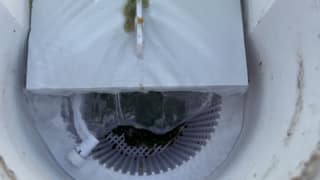
If the basket will not come out with light hand pressure, do not lever a screwdriver against the housing or faceplate. It may be cocked in its seat, swollen, cracked, or held down by debris. Remove loose material from the top and work the basket gently. Replace it if it no longer fits correctly.
Keep fingers out of the suction outlet at the bottom. A blockage beyond the basket belongs to a separate plumbing diagnosis.
3. Empty, Rinse, and Inspect It
Dump the contents away from the pool so wind or runoff cannot carry them back. Rinse between the ribs or through the mesh with moderate hose pressure.
Replace the basket if you find:
- a split rim or broken handle;
- missing ribs or torn mesh;
- a warped shape that lets debris pass around it; or
- damage that keeps it from sitting flat.
Do not run the pump without the basket during normal circulation. The basket is the first barrier between larger debris and the suction hose or pump.
4. Wipe the Housing and Check the Weir
With the pump still isolated, remove loose debris from the accessible housing. A soft cloth or nylon brush is enough for the grime that collects at the waterline. Use only a cleaner approved for both the skimmer plastic and the pool liner, and do not pour household cleaner down the suction outlet.

Move the weir lightly through its travel. It should not bind against the faceplate, stick shut, or hang loose from a damaged hinge. Clean the pool-side edge with a vinyl-safe pool brush, keeping the brush clear of the suction outlet.
Do not loosen the faceplate screws to clean behind them. Those screws clamp the liner and gasket around the wall opening. Disturbing them can create a leak or let the liner shift.
5. Check the Outside Without Taking It Apart
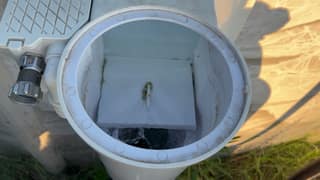
Look around the housing and hose connection for fresh drips, cracks, a kinked hose, a loose-looking clamp, or wet ground below the skimmer. Do not disassemble a dry, sound connection as part of cleaning the basket.
Water leaking at the wall, a cracked body, a failed gasket, and a blocked suction line are repair problems. Keep the pump off and use the skimmer manufacturer's repair procedure or call a pool service technician. Lowering the water or removing wall hardware without the correct procedure can damage the liner or pool wall.
6. Refit the Basket and Restart
Seat the clean basket in its proper orientation. It should sit flat, stay clear of the weir, and remain below the lid. Replace the cover and return any vacuum-port cover or diverter that was moved.
Check the pool level before restarting. Use the range in the skimmer manual; near the middle of the opening is common, but the installed skimmer's mark or instructions take priority. A low level can let the skimmer pull air.
Restore power and start the pump according to its priming instructions. During the first minute, watch for:
- a smooth sheet of water crossing the weir;
- normal return flow;
- a pump that gains and holds prime;
- air that clears rather than continuing from the returns; and
- drips at the housing, hose, and fittings.
Stop the pump if it runs dry, repeatedly loses prime, keeps drawing air, or produces a new leak.
If Skimming Is Still Weak
An empty basket rules out one restriction, not every circulation problem. Work from the pool toward the equipment.
First, correct a low water level and make sure the weir is not stuck. Confirm that the basket is seated and that a vacuum plate or winterizing part has not been left in the wrong position. Then look for a collapsed suction hose, a closed valve, or visible air entering at a connection.
The pump strainer and filter come next, but they are separate service points. Shut equipment down before opening either one. A filter can remain pressurized after the motor stops, so follow its pressure-relief instructions before touching a clamp or lid. If the suction line itself may be blocked, do not push a wire or improvised tool through the skimmer.
During heavy leaf fall, remove floating and sunken material with a pool leaf rake before it reaches the wall skimmer. That keeps a large load from packing into the basket at once.
A Useful Checking Rhythm
Look into the basket whenever you check the pool. Calm weather may leave it nearly empty for days; mowing, a storm, or one windy afternoon may fill it quickly. Flow is a poor calendar, so let the amount of debris set the interval.
Add the basket, weir, water level, and restart check to the weekly pool-maintenance routine. The cleaning itself is brief. The shutdown before it and the flow check afterward are the parts not to rush.
Frequently asked questions
Should I turn off the pump before cleaning the skimmer basket?
Yes. Shut the pump off and make sure a timer, app, automation system, or another person cannot restart it. Do not put a hand into the housing until flow has stopped and the pump is unable to start.
How often should I empty an above-ground pool skimmer basket?
There is no fixed interval. Check it whenever you check the pool, and always after strong wind, mowing, a storm, or heavy leaf drop. Empty it before packed debris begins to restrict flow.
Why is my pool skimmer not pulling water?
Start with the water level, weir door, and skimmer basket. If those are normal, check valve positions, the suction hose, pump strainer, filter pressure, and signs of an air leak. Each equipment check has its own shutdown procedure.
Can I run the pump without the skimmer basket?
Not during normal operation. The basket keeps leaves and larger debris out of the suction line and pump. Replace a cracked or misshapen basket with the correct part.
Can I remove the skimmer faceplate screws to clean behind it?
No. The screws help clamp and seal the liner around the wall opening. A leak, failed gasket, cracked housing, or loose faceplate is a repair job, not part of basket cleaning.


