

On this page
A robotic cleaner is a moving brush, intake, and debris filter. It can remove a large piece of the cleaning schedule, but its job stays inside that definition.
It does not test water, distribute sanitizer through the plumbing, skim every floating leaf, inspect equipment, or decide that cloudy water makes the pool unsafe. It also cannot collect dirt from a surface its body cannot reach.
The useful buying question is not "Does it clean the pool?" It is "Which repeated passes will this model take over in this pool?"
The Job a Bottom Robot Can Take Over
Broad, repeated floor coverage is the strongest reason to own one.

With the right filter media and enough basket capacity, a robot can collect routine dirt, pollen, fine sediment, and leaves that fit through its intake. A timer can start those passes without someone assembling a hose at the skimmer.
Coverage is model-specific. The Dolphin Escape is designed for the floor. The Dolphin Cayman also climbs walls but does not travel along the waterline. The Dolphin Premier adds waterline cleaning but misses shallow steps; the Clear UV reaches steps and the sun shelf without covering them on every cycle.
Those differences change how much labor the robot removes. They do not change the chemistry, circulation, and inspection jobs around it.
A Clean Floor Says Nothing About Sanitation
A basket full of dirt proves that the machine collected dirt. It does not show the free-chlorine level or pH, and clear water can still be outside its required chemical range.
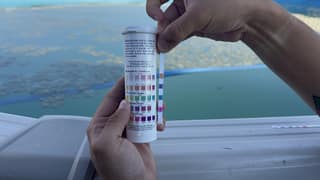
Keep testing free chlorine or bromine, pH, cyanuric acid, alkalinity, and hardness with methods suited to each decision. CDC recommends testing chlorine and pH at least twice per day and more often during heavy use. The test-strip guide explains where quick color checks help and where a drop-based result is the better basis for treatment.
During an algae bloom, measured sanitizer treatment addresses the algae. Brushing exposes attached growth; filters collect dead material. A robot can help with those physical tasks, but the green-pool process still depends on testing and measured treatment.
Its Pump Is Not the Pool's Circulation System
The cleaner's pump pulls nearby water through a small onboard filter while the machine runs. The main pump moves treated water through the skimmer, plumbing, heater or feeder where fitted, main filter, and returns.
One cannot stand in for the other. A clean robot path is not a reason to reduce circulation time without considering the pool volume, measured flow, equipment requirements, weather, bather load, and water condition.
The main filter still needs pressure or flow checks and the cleaning procedure for its type. The robot's basket does not backwash sand, rinse a cartridge, service a DE filter, or clear a blocked skimmer.
Floating and Oversize Debris Need Another First Pass
A bottom cleaner cannot collect a leaf while it is still drifting on the surface. The wall skimmer catches some material, while a separate surface robot such as the Betta SE handles a different layer of the pool.
After a storm or during heavy leaf drop, use a pole net before starting the bottom robot.
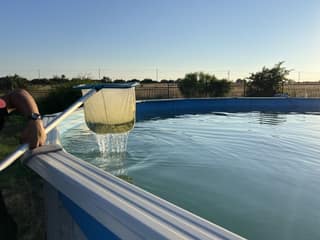
Sticks, seed pods, large leaf piles, and stones can block an intake or wedge under the chassis. The leaf-rake guide shows how to remove that load without spilling it back into the pool.
Pool Geometry Sets the Coverage Limit
Robots need enough water, width, and traction to keep their brushes against a surface. Steps, tanning shelves, square corners, ladders, fittings, above-ground coves, and tight transitions interrupt that contact.
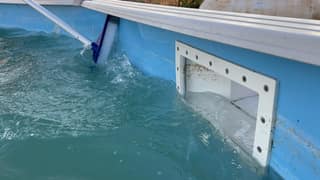
A waterline rating improves coverage; it does not promise every inch of every shape. Brush the sections left behind and direct loosened dirt toward the robot's route. For a vinyl pool, use the soft tool and controlled pressure described in the above-ground pool brushing guide.
If the same slick patch returns after cleaning, test the water and inspect local circulation. Repeating the same automatic cycle treats the symptom, not the reason that spot keeps growing film.
A Manual Vacuum Still Gives Exact Placement
Robots trade direct control for automatic coverage. A manual head is better when the job is one pile of fine sediment, a narrow ladder gap, a corner the route avoids, or material that approved equipment must send to waste.

That control comes with setup: the hose must be filled with water, the skimmer needs the correct adapter, and the pump and filter must stay within their operating limits. The manual vacuum guide covers the sequence and the important difference between FILTER and WASTE.
Scheduling Does Not Empty the Filter
A timer can start a cycle with yesterday's debris still in the basket. As the filter loads, flow and pickup can fall even though the robot continues moving.
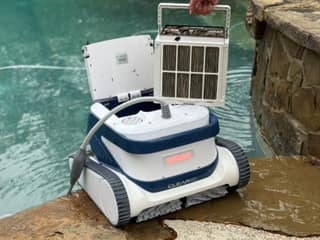
Inspect the basket often enough for the current season. Fine pollen, dead algae, and autumn leaves can justify cleaning after every cycle.
Follow the cleaner manual for shutdown and service. For a corded model, switch off and unplug the power supply as directed before inspecting the intake, brush, tracks, cable, or impeller area. Rinse the specified filter media and remove wrapped hair or fibers without reaching into powered moving parts.
The Perimeter Check Still Belongs to a Person
The robot cannot stop the pool from opening because the floor is no longer visible, a drain or suction cover is damaged, a ladder is loose, the water is below the skimmer range, or equipment is leaking.
Before swimming, check the full bottom for visibility, covers and fittings for damage, the ladder and rail for movement, normal return flow, the skimmer level, and the equipment area. Remove the cleaner and its cable before swimmers enter when the manufacturer's instructions require it; Maytronics manuals, for example, direct owners to take the robot out first.
An app notification that a cycle ended is not an inspection report.
Let the Leftover Material Choose the Next Tool
After a cycle, look at where the problem remains:
- Floating leaves or pollen: use the wall skimmer, surface robot, or net.
- A dirty waterline, step, cove, or fitting: brush it toward reachable water.
- One compact sediment pile: place a manual vacuum over it slowly.
- Dirt across the normal route: clean the robot filter, check the intake, and confirm the installed media can retain the particle size.
- Cloudy water: test it and inspect main circulation and filtration; repeated robot runs are not a water-quality diagnosis.
- A slick or green surface: follow the testing and algae-treatment process, using the robot only where its manual allows.
The remaining kit is small but specific: a finish-safe brush and pole, a surface net and leaf rake, a compatible manual vacuum, a reliable water test kit, the operating main circulation system, and the manuals for each device.
The robot should make those tools occasional and targeted. If it merely moves dirt while the owner still performs full-floor vacuuming each week, the model, filter media, cycle, or pool fit needs another look.
Frequently asked questions
Do I still need to brush my pool if I have a robotic cleaner?
Yes. Brush any waterline, step, shelf, corner, fitting, cove, or ladder area the robot does not maintain. Even a waterline model can leave sections where its brushes lose contact.
Do I still need a pool filter with a robotic cleaner?
Yes. The robot filters only the water drawn through its intake during a cycle. The pool pump and main filter circulate treated water through the plumbing and remove suspended material beyond the robot's path.
Can a robotic pool cleaner replace a manual vacuum?
It can replace broad routine floor vacuuming in many pools. A manual vacuum is still useful for one sediment pile, a tight ladder area, an avoided corner, or approved vacuum-to-waste work.
Can a robotic pool cleaner remove algae?
It can loosen attached material and collect some dead algae when the filter media is fine enough. It cannot sanitize the water, correct pH or cyanuric acid, or replace circulation and main-filter cleaning during an algae treatment.


