On this page
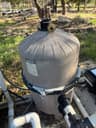
The pressure gauge on a cartridge filter is the simplest piece of diagnostic equipment on the pad, and it is also the most misread. A high number does not say "dirty cartridges." It says "more resistance than usual somewhere between the pump and the pool."
Dirty cartridges are the usual cause. They are not the only one, and cleaning them is enough work that it pays to check the cheap possibilities first.
What "Too High" Means
Filter pressure is relative. The number that matters is the difference between today's reading and the clean baseline for your system, measured at the same pump speed with the valves in the same positions.
Hayward's cartridge filter manuals set the service point at 7–10 PSI above the clean starting pressure. So a filter that reads 12 PSI clean is due for attention around 19–22 PSI. A filter that reads 18 PSI clean is not in trouble at 20. Check your manual for your model's threshold.
If you do not know your baseline, the first fix is to clean the cartridges, restart, and write the number down.
Check the Pump Speed First
On a variable-speed pump, the gauge moves with the RPM. A reading taken while the pump is at high speed will look alarming next to one taken at a low circulation speed, even with spotless cartridges.
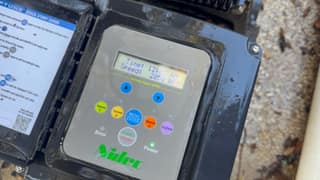
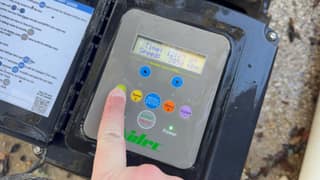
Before you decide anything, look at the pump display. If it is on a different speed than usual, either wait for the normal speed or set it there, let it stabilize, and then read the gauge.
Check the Valves Second
A partially closed valve on the return side raises filter pressure the same way dirt does, because it restricts flow after the filter. Walk the plumbing from the filter outlet back to the pool. Look at every valve handle, including the ones feeding a heater, a cleaner line, water features, or a spa. One that was bumped or left half-open after another job is a common cause of a sudden pressure jump.
Also check for anything new downstream: a return eyeball that was swapped for a smaller one, a clogged chlorinator, or a heater bypass that is now closed.
Then Look at the Cartridges
If the pump speed and valves are normal, the cartridges are the next suspect. Dirt packed into the pleats restricts flow through the fabric, and the gauge reads the back-pressure.
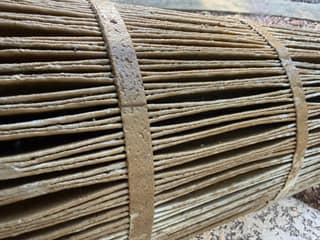
Shut down, relieve the pressure, and open the tank following the procedure in how to change a pool filter cartridge. Rinse the cartridges thoroughly, reassemble, bleed the air, and read the gauge again at the same pump speed.
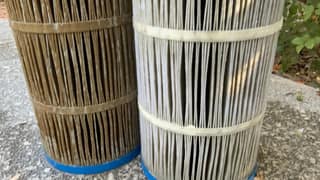
If the Pressure Is Still High After Cleaning
A few possibilities, roughly in order of how often I would expect them:
Oils in the fabric. A hose removes dirt but not sunscreen and body oil. The cartridge looks clean and still restricts flow. A filter-cartridge cleaner used per its label fixes this; a rinse does not.
A restriction you missed. Recheck every valve and anything downstream of the filter. Confirm the air relief closed fully and that nothing in the plumbing changed.
Worn cartridges. Fabric that has been cleaned many times eventually stops recovering. If careful cleaning, including a degreasing soak, no longer brings the pressure near baseline, and everything else checks out, replacement is reasonable. That is the condition-based guidance Hayward gives for its replacement elements.
A bad gauge. With the pump off and the air relief open, the gauge should read zero. One that does not is not trustworthy. Replace it.
When the Pressure Climbs Fast After Cleaning
If a fresh cleaning buys you only a few days before the gauge is back up, the cartridges are collecting something unusual. Algae, pollen season, dust from a new plaster finish, or a dirty pool after a storm will all load a filter quickly. Fix the source: brush and treat algae, skim heavily during pollen drops, and expect short cleaning cycles for the first weeks after replastering. The cartridges are doing their job; they just have more to catch.
Recording the Numbers
I keep three numbers for each cleaning: the pressure before, the pressure after, and the pump speed both were read at. Over a season that record answers most pressure questions without opening the tank. A rising "after" number says the cartridges are wearing out. A shrinking interval says the pool is dirtier than it was. A sudden jump with no change in either says go look at the valves.
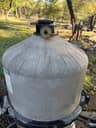
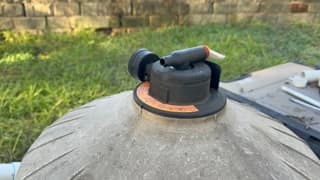
The air relief valve on top of the tank is where you confirm the gauge is honest. Pump off, relief open, gauge at zero.
Frequently asked questions
What is a normal pool filter pressure?
There is no single normal number. A clean filter on one system might read 8 PSI and another 18 PSI, depending on the pump, plumbing, and equipment. Record your own reading right after cleaning, at your usual pump speed, and treat that as normal for your pool.
How high is too high for pool filter pressure?
Hayward's cartridge filter guidance is to clean when pressure rises 7–10 PSI above the clean baseline. Check your filter's manual for its exact threshold. Readings far above that, or a gauge that keeps climbing quickly after cleaning, need investigation before you keep running the system.
Why is my filter pressure high right after cleaning?
First confirm you are comparing at the same pump speed and valve positions. Then check for a partially closed return valve, a closed or restricted downstream feature such as a heater or cleaner line, oils left in the cartridge fabric, or cartridges that are worn and no longer respond to cleaning.
Can a bad pressure gauge cause a high reading?
Yes. Gauges stick and drift. If the gauge does not return to zero when the pump is off and the air relief is open, it is suspect. Replace a faulty gauge rather than guessing from it, and never treat a stuck gauge as proof that the tank is depressurized.