


On this page
An iced latte is cold milk, ice, and a double shot of espresso. It is the easiest espresso drink to make at home because there is no milk to steam. The only way to get it wrong is to pour the hot espresso in the wrong order, which is exactly what most people do.
This is how we make it on our Breville Oracle. The espresso steps are the same on any machine.
What You Need
- A double shot of espresso, pulled fresh. Our latte guide covers the dose, grind, and shot in detail.
- Cold whole milk. Two percent and oat milk both work.
- A tall glass, 12 to 16 ounces.
- Ice. Larger cubes melt slower than crushed ice.
- A scale under the cup, if you want the shot to be the same every time.


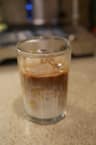
Step 1: Fill the Glass With Ice
Fill it all the way. Ice is not the enemy of an iced latte; melted ice is. A full glass stays cold longer than a half-full one because there is more cold mass and less room for the drink to warm up.
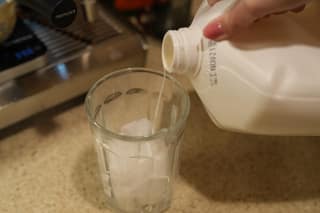
Step 2: Pour Cold Milk Over the Ice
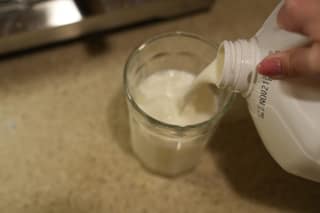
Pour milk until the glass is about two-thirds full. Leave room for the espresso.
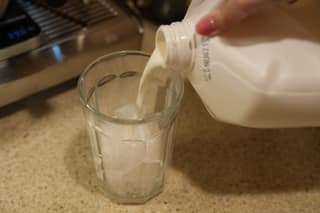
If you want it sweet, this is the moment. Add syrup to the milk and stir. Sugar added later will sit at the bottom.
Step 3: Pull the Double Shot
Pull the shot last so it goes into the glass seconds after it finishes. We dose 18 grams and stop around 36 to 40 grams in the cup. The scale on the drip tray is what makes that repeatable. Our espresso ratio guide explains the numbers.
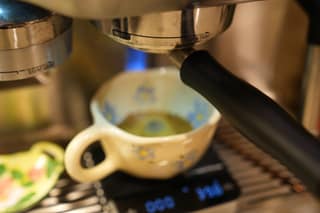
Do not let the espresso sit and do not try to cool it first. Fresh espresso has crema and sweetness that fade within a minute or two. The cold milk will take care of the temperature.
Step 4: Pour the Espresso Onto the Milk, Not the Ice
Tilt the cup and pour onto the surface of the milk. The espresso floats for a moment and then blends in.
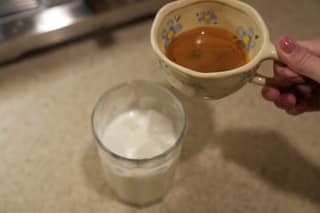
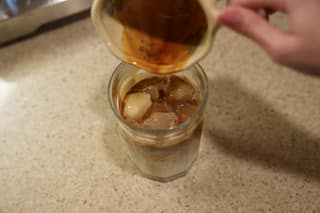
This is the step that separates a good iced latte from a watery one. Espresso poured directly onto ice melts a lot of it instantly. Espresso poured onto milk cools before it ever touches the ice.
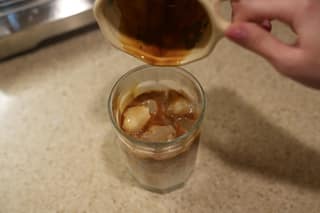
Step 5: Stir or Do Not
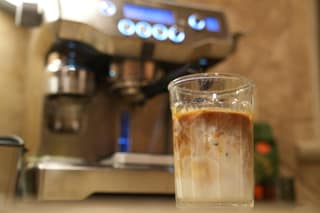
Leave it layered and the first sip is mostly espresso. Stir it and every sip is the same. Both are correct.
Getting the Strength Right
An iced latte tastes weaker than a hot one at the same ratio because cold mutes flavor and the ice adds some water as it melts. Three ways to fix it:
- Use a smaller glass. A 12-ounce glass with a double shot tastes noticeably stronger than a 16-ounce one.
- Pull two doubles for a big glass. More espresso, not less milk, keeps the texture right.
- Pull the shot a little shorter. Stopping at 34 grams instead of 40 makes it more concentrated. Do not go much shorter or it turns sour.
What does not work is adding more ice or less milk. That just makes it colder and thinner.
Common Mistakes
- Espresso onto the ice. Covered above. This is almost always the problem.
- Letting the shot sit. Pull it last, pour it immediately.
- Sugar at the end. It will not dissolve. Sweeten the milk first.
- Stale beans. No crema, flat taste. Nothing in the glass fixes it.
- Warm milk. Milk that sat on the counter melts ice fast. Use it straight from the fridge.
More Coffee Guides
Frequently asked questions
Why does my iced latte taste watery?
Usually because the hot espresso hit the ice directly and melted it. Pour the milk over the ice first, then pour the espresso onto the milk. The milk absorbs the heat and the ice survives.
How many shots go in an iced latte?
A double shot, about 36 to 40 grams of espresso, for a 12- to 16-ounce glass. If you like it stronger, use a smaller glass rather than more milk. A large glass may need two doubles.
Do you need to cool the espresso before making an iced latte?
No. Pour it straight from the machine onto the milk. Letting espresso sit kills the crema and flavor. The cold milk cools it instantly.
Can you make an iced latte with cold brew?
You can make a cold-brew latte, but it is a different drink. Cold brew is far less concentrated than espresso, so it tastes milder and milkier at the same ratio.
How do you sweeten an iced latte?
Add syrup or sugar to the milk before the espresso goes in, and stir. Sugar does not dissolve in a cold finished drink. Simple syrup or vanilla syrup mixes in cleanly.


