


On this page
A live frog does not need to be chased, grabbed, or moved to a distant pond. It needs a controlled way out of the pool.
Use a soft, fine-mesh net on a telescopic pole. Work from stable ground, move slowly, and keep pets and swimmers back while you make the scoop.
First, Make the Area Safe
Stop a robotic cleaner and move its cable out of the way. Keep dogs indoors or on a leash, and ask everyone else to stay clear of the deck.
If the frog is near a wall skimmer, vacuum port, or another suction fitting, shut off the circulation pump and prevent a timer, app, or automation system from restarting it. Do not put hands or a net against an active suction opening. The same shutdown rule applies if the frog has reached the skimmer basket.
Stay on the deck. Do not enter water you cannot see through, and do not lean so far across the rail that you lose your balance.
Guide the Frog Into the Net
A soft aquarium-style or pool net with fine mesh is easier on a small frog than a coarse leaf rake. Check the frame first for exposed wire, cracked plastic, or torn mesh.
Lower the net into the water a short distance in front of the frog. Sink the rim, then use one slow movement to guide the frog over the bag. Coming from below is usually easier than pressing the net toward the wall.
Do not jab at it. If the frog dives, pause and let it surface instead of sweeping blindly around the pool.
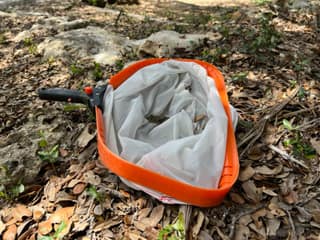
Once the frog is over the mesh, rotate the opening upward and lift steadily. Keep it centered in the bag so it is not pinned against the frame. Let water drain for a few seconds over the pool, then move the net out of direct sun.
Set the Net Down Near Cover
Choose the nearest safe, shaded patch outside the immediate pool area. Low plants, leaf litter, or damp ground on the same property are better choices than bare hot concrete. Keep away from a road, mower, pet, storm drain, and foot traffic.
Place the net flat at ground level and tip the rim slightly. Let the frog leave without shaking the bag or touching its legs.
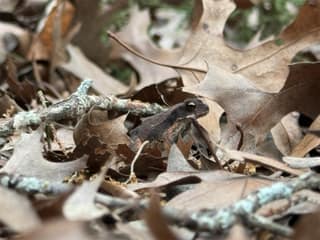
This is a rescue from an immediate hazard, not a wildlife relocation. Partners in Amphibian and Reptile Conservation advises against moving wild amphibians to new locations because handling causes stress and movement between sites can spread disease. Do not carry the frog to a pond, park, creek, or someone else's property.
Local rules also matter. Some regions regulate invasive frogs and prohibit their release. If the species may be invasive, photograph it from a distance and contact a state wildlife agency or county extension office for identification and instructions.
Avoid Bare-Handed Handling
Amphibian skin is sensitive to residues from soap, lotion, sunscreen, insect repellent, pool chemicals, and cleaning products. A net avoids most contact.
If a frog is tangled and brief handling is the only way to free it, use a new pair of powder-free nitrile gloves. Support the body without squeezing, and never pick it up by a leg. Use a fresh pair for each animal.
If it has a visible injury, cannot right itself, or remains unresponsive, set the net in a quiet shaded place away from pets and call a licensed wildlife rehabilitator or state wildlife agency. Do not attempt to feed, medicate, or soak it. Removal from the pool does not guarantee recovery, and behavior alone cannot tell you its condition.
Wash your hands with soap and water after the rescue, even if you wore gloves.
Check the Water Afterward
For one live frog with no visible feces, do not guess at a shock dose. Remove any debris, test free sanitizer and pH, and bring both back to the operating range for the pool and sanitizer in use. Check the skimmer, cleaner basket, and floor for another animal.
Use a different response if the frog was dead or if feces were present:
- For a dead frog, follow the CDC procedure for a dead animal in a pool. It specifies removal, handwashing, filtration, and a measured chlorine-and-pH treatment period.
- For feces, close the pool and follow the CDC fecal-incident instructions. Remove it with a net or bucket, never a vacuum. CDC gives backyard owners a measured chlorine-and-pH procedure for formed stool and warns that the much higher public-pool hyperchlorination protocol for diarrhea does not apply to backyard pools.
Help the Next Frog Climb Out
A pool-specific wildlife escape ramp gives small animals a route up a smooth wall. Position it so the lower end stays in the water as the level changes. The ramp should have a grippable surface, sit against the pool wall, and remain secured without creating a sharp edge or trip hazard.
Placement is as important as texture. Trapped animals often follow the perimeter. Wildlife-ramp guidance from Texas A&M explains why a ramp needs to meet the wall instead of leaving a gap an animal can swim beneath. Use a device made for swimming pools, not a homemade expanded-metal livestock ramp.
Check the ramp after wind, swimming, and water-level changes. It cannot help if its lower end is dry or it has flipped over.
A few other habits reduce risk:
- Check the surface and skimmer each morning during frog season.
- Turn off outdoor lights that are not needed overnight; insects around the light can draw wildlife toward the pool.
- Keep a code-compliant pool barrier and self-closing gate in working order, but do not expect ordinary fencing to exclude small frogs.
- Use a fitted safety cover only as its manufacturer directs.
- Keep sanitizer and pH in their normal ranges. Do not add extra chlorine, pesticide, salt, or a home remedy as a frog repellent.
If You Find Eggs or Tadpoles
Do not transfer eggs, tadpoles, or pool water to a natural pond, creek, ditch, or storm drain. The species may be protected or invasive, and moving aquatic animals or water between sites can spread pathogens.
Turn off suction if animals are being drawn toward an intake, keep people and pets out, and ask the state wildlife agency or local extension office to identify them from a photo. Their advice can account for the species and the rules where you live.
Frequently asked questions
What is the safest way to remove a frog from a pool?
Guide it into a soft, fine-mesh net from below, turn the opening upward, and lift smoothly. Set the net on shaded ground at the nearest safe spot outside the pool area and let the frog leave on its own.
Should I touch a frog with my bare hands?
Avoid direct contact when a net will work. Residue from soap, lotion, sunscreen, repellent, and cleaners can harm sensitive amphibian skin. If brief handling is unavoidable, use a new pair of powder-free nitrile gloves and never pull or hold the frog by a leg.
Where should I release a frog found in my pool?
Choose the nearest shaded cover outside the immediate pool hazard, such as low plants or leaf litter on the same property. Do not move it to a pond, park, or another property. If it may be a regulated invasive species, ask the state wildlife agency before releasing it.
How can I keep frogs from drowning in my pool?
Install a pool-specific wildlife escape ramp that stays in contact with the water and meets the wall where an animal circling the edge can find it. Check the pool and skimmer each morning, and turn off unneeded lights that attract insects.
Do I need to shock the pool after finding a frog?
Not automatically for a live frog. Remove visible debris, test the water, and return sanitizer and pH to the pool's normal range. A dead animal or fecal contamination calls for the specific CDC response, not a guessed shock dose.


