


On this page
We loved the idea of a paver driveway. Then the quote came back at $120,000.
Concrete seemed like the more practical alternative—until that quote came in at $65,000. Asphalt? $20,000.
For our driveway, which covers more than 6,000 square feet, those weren't small differences. Choosing asphalt meant spending $45,000 less than concrete and $100,000 less than pavers.
We couldn't afford the pavers, even though they would have been beautiful. And both the paver and concrete quotes felt overpriced for what we needed: a finished driveway that looked good and made sense for our property.
So we shopped around, compared our options, and went with asphalt paving.
We would make the same decision again. But there are things we would tell anyone before they hire an asphalt paving contractor—especially in Texas. The price matters, but so do the base, drainage, finished thickness, and maintenance you're signing up for.
Here's what our driveway cost, why asphalt won, and what we learned along the way.
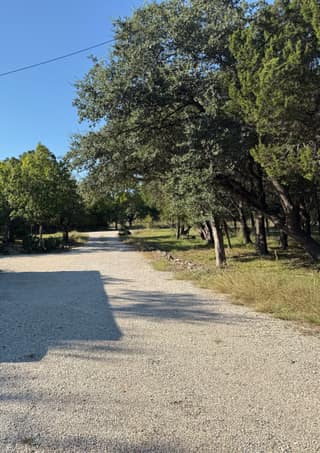
Our Asphalt Driveway Cost vs. Concrete and Pavers
These were the numbers we were looking at for our property:
| Driveway material | Our project price or quote | Cost per square foot using 6,000 square feet | Additional cost over asphalt |
|---|---|---|---|
| Asphalt | $20,000 | $3.33 | — |
| Concrete | $65,000 | $10.83 | $45,000 |
| Pavers | $120,000 | $20.00 | $100,000 |
Our driveway is over 6,000 square feet. We're using 6,000 here to make the comparison easy, so the actual cost per square foot is slightly lower than these reference figures.
The important number for us was the total. We weren't deciding whether to spend a little more for a different finish. The concrete quote was 3.25 times the asphalt price, and the pavers were six times the price.
That completely changed the conversation.
How much does asphalt paving cost per square foot in Texas?
For our project, the $20,000 asphalt price worked out to roughly $3.33 per square foot or less.
That's our experience—not a guaranteed Texas paving rate. Site access, underlying soil, project size, materials, expected vehicle traffic, and the contractor all affect pricing. A driveway that needs substantial excavation and drainage work is a different project from paving over an already suitable base.
Our advice is to use our numbers as a comparison point, then get quotes for your actual property.
Most importantly, compare what those quotes include. A price for installing the asphalt surface is not automatically the same as a price that includes all the preparation underneath it.
Why We Wanted to Pave Our Driveway
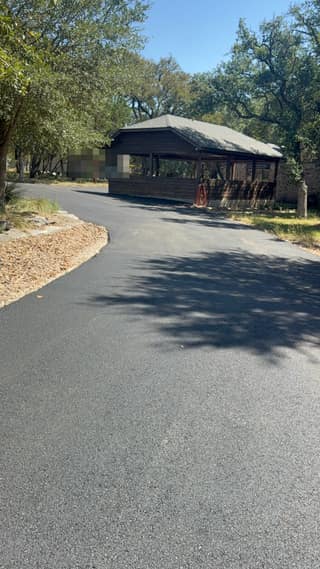
Before choosing a material, we had to decide what we actually wanted from the project.
We wanted a proper paved driveway. Something that felt finished, looked intentional, and worked for everyday use. We weren't trying to turn the entire driveway into the most expensive architectural feature on the property.
That distinction mattered.
With more than 6,000 square feet to cover, every additional dollar per square foot adds more than $6,000 to the project. A finish that seems like a reasonable upgrade on a small driveway becomes a major financial decision on a large one.
We still cared about appearance. We just didn't think appearance alone justified another $100,000.
For us, asphalt was the point where the project became realistic without giving up the main thing we wanted: a paved driveway.
Asphalt vs. Pavers: Beautiful, but Outside Our Budget
Pavers were the option we liked most aesthetically.
There's a reason people are drawn to them. The colors, patterns, and different shapes offer far more design variety than a plain blacktop driveway. Driveway-rated pavers can create everything from a traditional stone look to a cleaner, more contemporary entrance.
But our quote was $120,000.
We couldn't afford that, and we weren't going to pretend otherwise.
It's easy to look at inspiration photos and decide that a certain material is the only acceptable choice. It's different when you're looking at the actual number and deciding whether the improvement is worth what it costs.
For our property, it wasn't.
We still think pavers would have looked beautiful. We just don't regret choosing a driveway we could actually justify paying for.
Our takeaway: Pavers were our favorite-looking option. Asphalt was the option that fit our budget and priorities.
Asphalt vs. Concrete: It Was Not the Same Price
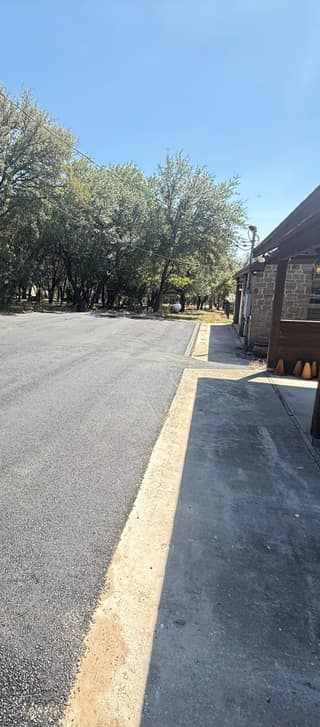
One of the more surprising parts of this process was a conversation with a concrete contractor.
He told us concrete would cost about the same as asphalt.
It did not.
Our concrete quote was $65,000. Our asphalt price was $20,000. That's a $45,000 difference—not a rounding error or a small upgrade.
To be fair, concrete has real advantages. Properly installed concrete can offer a long service life and relatively low routine maintenance. Concrete-industry guidance identifies longevity and reduced surface-maintenance needs as important reasons homeowners choose it.
Those benefits deserve consideration. But they didn't make our actual quotes equal.
Had concrete been close in price, our decision would have been harder. At more than three times the asphalt price, we couldn't see enough additional value for our driveway.
That's why we recommend getting written quotes for each material rather than relying on someone's claim that they cost the same.
Maybe they're close on another property. They weren't on ours.
Shopping Around Was One of the Most Important Things We Did
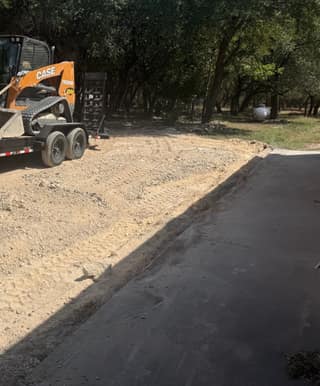
We didn't want to choose a driveway material based on one contractor's opinion.
We shopped around.
That gave us a much clearer picture of what the project could cost and helped us separate the driveway we wanted from the driveway someone wanted to sell us.
Our advice is to get multiple written proposals with enough detail to compare the work—not just the bottom-line price.
Before choosing an asphalt paving contractor, we would want these questions answered:
- What area are you paving? Get the dimensions or square footage in writing.
- What preparation is included? Clarify excavation, grading, base material, and drainage work.
- What is the finished asphalt thickness? Ask for the thickness after compaction.
- What vehicle loads is it designed for? Describe regular deliveries, trailers, RVs, or other heavy use.
- What happens if there is a problem? Get the workmanship warranty, exclusions, and repair responsibility in writing.
We would also ask to see older completed driveways—not just photos taken immediately after paving.
And we would be cautious about anyone pushing an immediate decision because they supposedly have leftover asphalt from another job. The Washington Asphalt Pavement Association's homeowner guidance specifically warns about that sales pitch, pressure tactics, and work offered without a proper contract.
Shopping for value is not the same thing as hiring the cheapest person willing to cover your driveway in black material.
How Our Asphalt Driveway Project Was Put Together
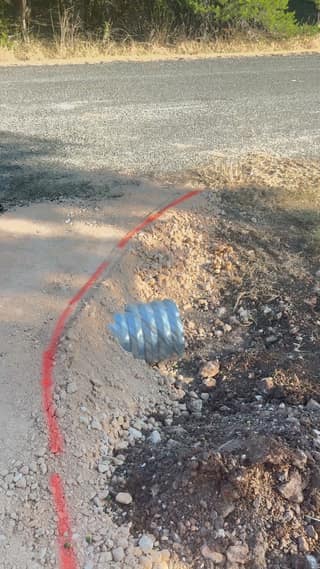
The paving itself is only part of the job.
Our project scope included grading, road-base preparation, and drainage work, including a culvert and French drain, before the hot-mix asphalt surface.
That's an important distinction. We weren't just choosing a surface color. We were choosing how to build a driveway.
Preparing the site and getting the drainage right
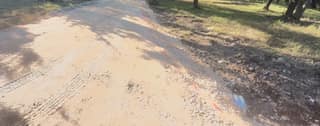
The first priority was the shape of the driveway and how water would move through the area.
A driveway needs to tie into the surrounding property properly. That means considering the slope, transitions, and drainage—not simply making the surface look level. TxDOT's pavement guidance calls for evaluating terrain, cross slopes, culverts, and other drainage features when assessing a site.
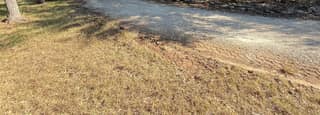
For a homeowner, the question is straightforward:
Where will the water go when it rains?
That answer should be clear before paving begins. We would much rather address drainage during preparation than find out afterward that the new surface directs water somewhere it shouldn't.
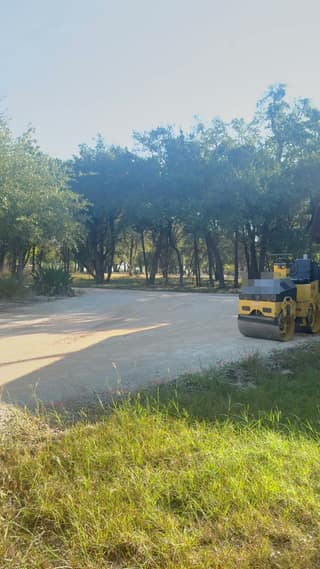
Building and compacting the base
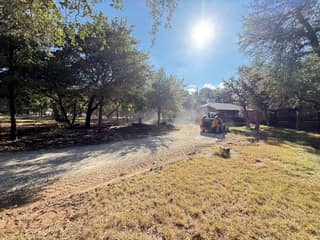
Underneath the asphalt is the foundation supporting it.
The road base needs to provide a stable platform, and the underlying ground needs to be suitable for the intended use. TxDOT identifies the design and preparation of the base and underlying soil as major factors in pavement performance.
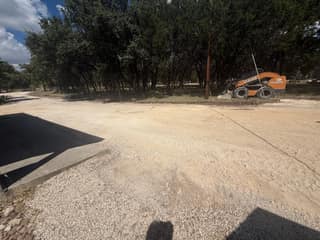
This is where we would be especially careful about comparing quotes.
Two contractors can offer the same square footage of asphalt while proposing very different work underneath it. A cheaper quote isn't necessarily a better deal if it leaves out preparation the driveway needs.
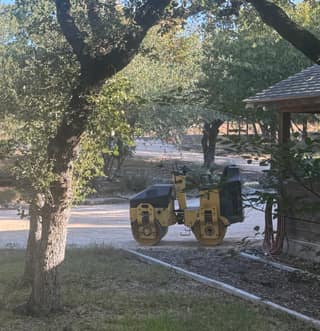
The finished black surface is what you see. The foundation is what we would want explained.
Installing the hot-mix asphalt
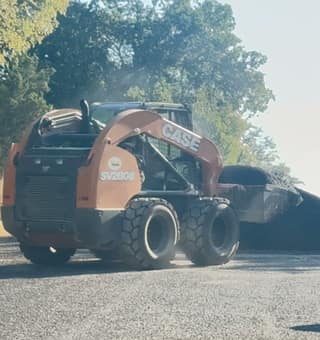
Our project used hot-mix asphalt.
Asphalt paving material is a mixture of aggregate—such as crushed rock and sand—and a binder that holds it together. It's a pavement material, not simply a liquid coating applied to the ground, as the European Asphalt Pavement Association explains.
During installation, a paving machine spreads the delivered material and establishes its profile and initial thickness. That controlled placement is part of achieving a consistent finished surface.
Rolling and compacting the surface
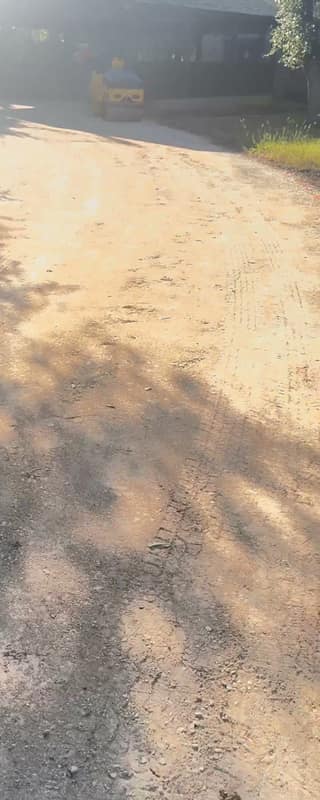
After placement, the asphalt is compacted.
This isn't just about making it look smooth. Inadequate compaction can allow pavement to continue compressing under traffic, contributing to depressions and ruts, which is why the Washington Asphalt Pavement Association treats compaction as one of the keys to a driveway that holds up.
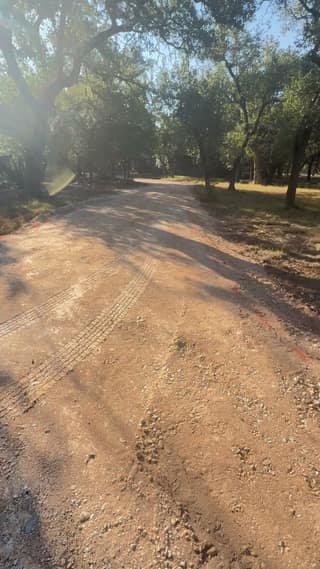
One useful detail from our project specification was the difference between loose thickness and compacted thickness: it called for asphalt laid at 2.5 inches and compacted to 2 inches.
That was our specification, not a universal recommendation. The appropriate pavement section depends on the foundation and the loads it needs to support. Asphalt Institute guidance specifically distinguishes between driveways used by cars and those carrying truck traffic.
When someone quotes "three inches of asphalt," ask whether they mean before or after compaction.
Following the contractor's instructions afterward
A finished-looking driveway isn't an invitation to immediately park the heaviest vehicle you own on it.
Get clear instructions on when to walk, drive, and park on the new surface. Asphalt-industry homeowner guidance recommends allowing a few days before opening a new driveway and being particularly cautious about heavy vehicles on fresh pavement.
We would get those instructions in writing rather than guessing.
The Biggest Advantages of Asphalt Paving for Us
The upfront savings were substantial
This was the deciding factor.
Asphalt let us complete the driveway for $20,000 rather than stretching to $65,000 or considering a $120,000 option we couldn't afford.
We didn't need a complicated calculation to understand the difference. Spending another $45,000 needed to deliver something we valued enough to justify it. For our driveway, concrete didn't clear that bar.
We liked the simple, finished appearance
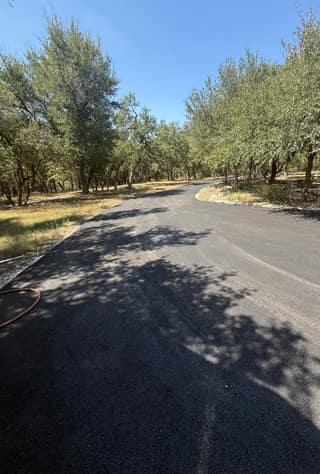
We still prefer the decorative possibilities of pavers. But that doesn't mean we dislike asphalt.
To us, a straightforward blacktop driveway is a perfectly good look. We wanted the driveway to complement the property, not consume an enormous share of the improvement budget.
Choosing asphalt wasn't giving up on the project. It was choosing a simpler finish.
Repair and resurfacing are possible
Asphalt also offers repair options as it ages.
Depending on the condition, an existing asphalt driveway may be suitable for crack repair, surface treatment, or replacement of the asphalt surface while retaining a sound base. Failed foundation areas still need to be addressed; resurfacing is not a substitute for fixing underlying problems.
We like having those options, even though we're not treating them as free maintenance or a guarantee that every future problem will be easy to fix.
Asphalt Driveway Cons: What We Wouldn't Ignore in Texas
We're happy with our decision, but asphalt has tradeoffs.
It gets hot
A dark driveway in direct sun is not a cool outdoor surface.
The EPA notes that conventional asphalt can reach very high surface temperatures; one Arizona study it cites measured temperatures up to 152°F. That isn't a measurement of our driveway, but it illustrates why heat belongs in the conversation.
We would not choose blacktop expecting it to behave like a comfortable barefoot patio.
It can scuff or develop depressions
Asphalt is not immune to tire scuffing or deformation. Pavement design and compaction matter, and turning a vehicle's wheels while it remains stationary can be particularly hard on the surface.
Tell the contractor how the driveway will actually be used. Regular heavy deliveries or long-term vehicle storage deserve discussion before installation.
Texas soil still matters
Asphalt is sometimes described as a flexible pavement, but that doesn't mean it can overcome an unsuitable foundation.
TxDOT notes that Texas has some of the most expansive soils in the country, and that they cause distress in pavements around the state. Proper foundation design, drainage, and any necessary soil treatment remain important.
We wouldn't accept "asphalt flexes" as an explanation for skipping preparation.
It isn't a maintenance-free purchase
We didn't choose asphalt because we expected to forget about it forever.
Crack repairs, surface upkeep, and eventual rehabilitation belong in the ownership calculation. Concrete may offer a longer interval before major replacement; concrete-industry guidance commonly identifies longer service life as one of its advantages over asphalt. Actual results still depend on installation, use, and conditions.
The lower initial price was compelling to us. It wasn't proof that asphalt would have the lowest possible cost over every future year.
It doesn't offer the same decorative finish
This is the easiest downside to admit.
We think pavers look better. Someone who strongly prefers a decorative driveway may never be completely happy with blacktop.
For us, though, the appearance difference wasn't worth another $100,000. That's a personal judgment, and it was the right one for our budget.
Asphalt Driveway Maintenance: What to Budget For
Our approach would be to inspect the driveway periodically, address developing problems, and get advice based on its actual condition.
Sealcoating is one possible part of that maintenance. Colorado Asphalt Pavement Association guidance discusses intervals of approximately two to five years and advises against sealing a brand-new driveway immediately. The appropriate timing should account for the surface and the product being used.
We would ask the contractor for a maintenance plan rather than assume the driveway needs another coating every year. A year after paving, we had the same contractor seal the driveway for $2,000; we cover our asphalt driveway sealing cost and maintenance experience in a separate article.
It's also worth understanding what you're buying:
Sealcoating is surface maintenance. Resurfacing adds a new asphalt layer. Neither automatically fixes a failed base. Severely deteriorated areas need evaluation and appropriate repairs before another surface is installed.
For us, accepting maintenance was reasonable. Ignoring it completely would make the cost comparison less honest.
Our Final Verdict: We're Glad We Chose Asphalt
We started with the idea of a beautiful paver driveway. We ended up with an asphalt driveway that made much more sense for us.
The pavers were $120,000. Concrete was $65,000. Asphalt was $20,000.
We couldn't afford the pavers, and we couldn't justify the concrete quote. Both felt too expensive for what we needed from more than 6,000 square feet of driveway.
Asphalt wasn't perfect. It wasn't our favorite decorative finish, and it comes with maintenance. But it let us complete the project without spending tens of thousands more for a different material.
Our biggest advice is to shop around, compare the actual work being quoted, and put just as much attention into the base and drainage as the surface.
For our Texas driveway, asphalt was the right balance of appearance, practicality, and cost.
And yes—we would do it again.
Frequently asked questions
Is asphalt cheaper than concrete?
It was much cheaper for our project: $20,000 for asphalt versus a $65,000 concrete quote. We would not assume every property will have the same price difference. Get comparable written proposals and look at both the installation scope and your long-term priorities.
How much did it cost to pave your 6,000-square-foot driveway?
Our asphalt price was $20,000, and the driveway covers more than 6,000 square feet. Using 6,000 square feet as a simple reference, that comes to approximately $3.33 per square foot. Because the actual area is larger, the actual rate is slightly lower.
Can you pave asphalt over an existing gravel driveway?
An existing gravel driveway may provide material that can be incorporated into a suitable foundation, but its condition has to be evaluated. Don't assume that being able to drive on the gravel means it is ready for asphalt. The underlying support, drainage, and base preparation need to suit the finished pavement and its intended loads.
How long does an asphalt driveway last?
There isn't one guaranteed lifespan. Colorado Asphalt Pavement Association homeowner guidance describes service of up to about 20 years for a well-designed driveway, with construction quality and maintenance central to the result. We would treat that as general guidance, not a promise for our property or yours.
Is two inches of asphalt enough for a driveway?
It can be appropriate for some car-only applications, but it is not the right answer for every site. Truck traffic, the base, underlying ground, and the proposed asphalt mixture all matter. Ask the contractor to explain the design for your driveway rather than choosing a thickness from an internet rule of thumb.
Is asphalt a good choice for a long driveway?
For us, yes. The larger the area, the more important the cost difference became. Our driveway needed to be functional and look finished, but it didn't need a six-figure surface. We would put asphalt on the shortlist for anyone facing a similar decision.
Would you choose asphalt again?
Yes. We would still shop around, still get the scope in writing, and still pay close attention to the preparation. But given the same driveway, budget, and quotes, we would choose asphalt again.


