


The verdict · OM System Tough TG-7
The TG-7 fit in my day bag, was easy to use underwater, and got close-ups I'd struggle to make with an action camera. Its 12MP sensor, basic autofocus, limited exposure controls, and 4K/30p video can't match a mirrorless camera. I'd still take it on another trip built around snorkeling and recreational diving.
What works
- Waterproof to 15 meters without a separate housing
- Small enough to carry as a normal travel camera
- One-centimeter close focus and useful microscope modes
- RAW capture gives the 12MP files more editing room
- Bright f/2 lens at the 25mm-equivalent wide end
- Physical controls work with wet hands and inside the PT-059 housing
- Established system of housings, wet lenses, lights, and strobes
What doesn't
- Small 1/2.33-inch sensor loses detail as light and ISO get worse
- No full manual exposure or shutter-priority mode
- 4K stops at 30p, and the 4GB cap holds each 4K clip to about five minutes
- Contrast-detection autofocus can miss moving fish or low-contrast subjects
- Fixed rear screen has no touch control, and there is no viewfinder
- Video stabilization is digital and crops the frame
- Housing, lighting, and mounting hardware can cost as much as the camera
OM System Tough TG-7 — key specs
| Sensor | 12MP effective 1/2.33-inch backside-illuminated CMOS (4000 × 3000) |
|---|---|
| Processor | TruePic VIII |
| Lens | 4.5–18mm, equivalent to 25–100mm; 4× optical zoom |
| Maximum aperture | f/2 at wide angle to f/4.9 at telephoto |
| Focus | Contrast-detection AF; 10cm standard minimum, 1cm in Super Macro and Microscope modes |
| Still formats | JPEG, losslessly compressed ORF RAW, or RAW+JPEG |
| ISO range | ISO 100–12,800 |
| Shutter and burst | 1/2–1/2000 sec normally; up to 4 sec in A mode; 5fps or up to 20fps electronic burst |
| Stabilization | Sensor-shift stabilization for stills; digital stabilization for video |
| 4K video | 3840 × 2160 at 30p or 25p, H.264, about 102Mbps; 4GB file limit |
| High-speed video | 1080p/120, 720p/240, or 640 × 360/480; 20-second capture limit without audio |
| Screen | Fixed 3-inch, 1.04-million-dot LCD; no touchscreen or EVF |
| Native water rating | 15m / 50ft, with a maximum 60-minute underwater session |
| Other rugged ratings | Shockproof from 2.1m, freezeproof to 14°F / -10°C, crushproof to 100kg / 220lb, IP6X dustproof |
| Housing compatibility | PT-059, rated to 45m / 147ft |
| Memory | SD, SDHC, or SDXC; UHS-I supported and UHS-I U3 required for 4K or high-speed video |
| Battery | LI-92B, 1350mAh; about 330 stills by CIPA's standard; USB-C in-camera charging |
| Connectivity and sensors | USB-C 2.0, Micro HDMI, Wi-Fi, Bluetooth, GPS, compass, pressure sensor, and thermometer |
| Size and weight | 113.9 × 65.8 × 32.7mm; 249g / 8.8oz with battery and card |
| US list price | $649.99; retailer promotions vary |
On this page
I've worked with cameras through much of my career, from product photography to travel work. The hard part of choosing one usually isn't finding the best specification sheet. It's finding the camera that fits the trip well enough to come along.
For Okinawa, I wanted something much smaller and less expensive to put underwater than my Sony A7 IV. I also wanted a dedicated camera so I didn't have to put the phone holding my boarding passes, maps, hotel details, and messages inside a dive housing.
I landed on the OM System Tough TG-7. It works as a point-and-shoot when I want it to, but the RAW files, underwater modes, close-focusing system, physical controls, and housing support gave me room to learn. I carried it, used it, and came home with the photographs I wanted.
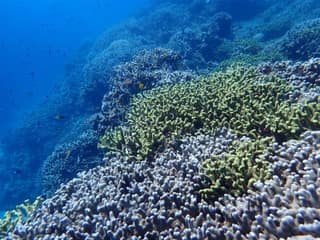
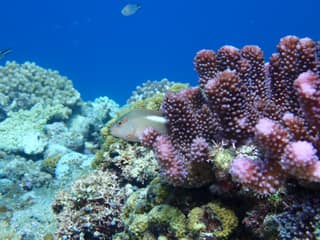
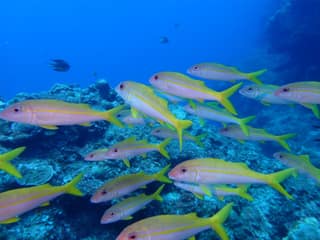
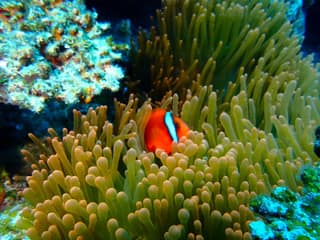
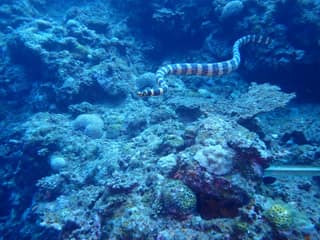
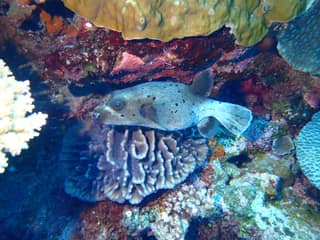
Every underwater photograph on this page is mine, shot with the TG-7 in Okinawa.
I wrote separately about the wildlife, water clarity, and why diving Okinawa earned a 10/10 from me.
Some links on this page are affiliate links. Terra Hills may earn a commission, but your price and my recommendation stay the same.
Taking the OM System TG-7 to Okinawa
Why I Bought the TG-7 for Okinawa
I stayed at the Hyatt Regency Seragaki Island in Onna for five nights during an August 2026 trip. Diving, snorkeling, beach time, and long drives around Okinawa all had to fit before I returned to Tokyo.
A mirrorless dive system would've given me a larger sensor, stronger autofocus, and more control. It also would've meant traveling with a large housing, port, arms, lights or strobes, spare seals, and a case built around the camera. The housing alone can cost more than the TG-7 system I assembled.
An action camera would've been easier for wide video, but underwater macro was one of my priorities. A phone housing would've kept the packing list short, but it put too much of my trip in one device.
The TG-7 sat in the middle:
- small enough to fit in a normal day bag;
- waterproof on its own for shallow use;
- compatible with a 45-meter housing for scuba;
- equipped with a real optical zoom and RAW capture;
- able to focus within about one centimeter;
- expandable with a tray, continuous light, strobe, and wet lenses.
I bought it because all of that fit in one small kit.
Check the OM System Tough TG-7 Red on Amazon
What It Was Like to Travel and Dive With
The TG-7 moved between my day bag and the PT-059 housing throughout the trip. I assembled the single-handle tray and light, worked the housing controls underwater, switched between wide reef scenes and close subjects, and cleaned everything after saltwater use. I also carried the camera on its own instead of leaving it sealed in the housing all week.
Once I got in the water, the specification sheet mattered less than changing a setting before a fish moved and still liking the file when I got home. Missed shots also made it clear when I was fighting the camera and when distance, water, or my own technique was the problem. The tray and light helped, but every addition made the rig bigger.
Where It Fit Between My Sony and an Action Camera
The TG-7 isn't a miniature Sony A7 IV. Its 12MP sensor measures about 6.2 by 4.6 millimeters, so it can't collect light like a full-frame sensor. I saw the gap when the water got dark or I needed a heavy crop.
It also isn't the strongest compact video camera. A current action camera gives me higher frame rates and smoother digital stabilization. The TG-7 stops at 4K/30p, and its 4GB file-size limit keeps 4K clips short.
I'd still buy the TG-7 again for this trip. It gave me more control over still photographs than an action camera, much better close-focus tools, and a system I could manage in ordinary luggage. Underwater mode made the first shots easy, while RAW capture and microscope tools gave me somewhere to go after the basics.
I could start small without being locked into one fixed ultra-wide view.
OM System TG-7 Image Quality, Lens, and Macro
Image Quality: Good Light Matters More Than 12MP
The TG-7 uses a 12MP backside-illuminated 1/2.33-inch CMOS sensor and OM System's TruePic VIII processor. The largest still is 4000 by 3000 pixels.
Twelve megapixels is enough for websites, social media, photo books, and moderate prints when the exposure and focus are right. It leaves less room for cropping than a modern phone's high-resolution mode or a 33MP Sony file, though. If a distant subject takes up a small part of the frame, it stays small.
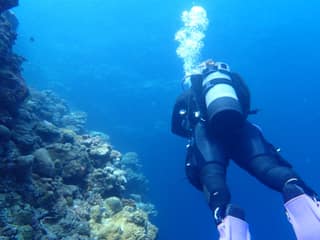
The small sensor's bigger problem is low light. As ISO rises, noise reduction smooths fine textures and water loses subtle tonal detail. Dark rock, a black wetsuit, and a bright patch of surface water can also exceed the file's useful dynamic range sooner than they would on a larger sensor.
RAW capture helps. The TG-7 records losslessly compressed .ORF files as well as JPEGs, and RAW+JPEG gives me a ready-to-share file beside one with more room to adjust white balance, highlights, shadows, and noise reduction. RAW can't create detail the sensor missed, but it lets me decide how much texture to trade for a cleaner image.
The photographs I like most from Okinawa were made close to the subject. Less water between the lens and subject means less suspended material, less color loss, and more contrast. That shooting habit matters more than buying a card with a faster number printed on it.
The 25–100mm Lens Makes It More Than an Action Camera
The built-in 4.5–18mm lens covers the same angle of view as a 25–100mm lens on a full-frame camera. It starts at f/2 on the wide end and drops to f/4.9 at full telephoto.
Underwater, I spent most of my time near 25mm. Water cuts clarity, so I got cleaner files by moving closer and staying wide instead of hanging back and zooming. The f/2 maximum also brings in more light at the focal length I used most below the surface.
I found the 100mm-equivalent end more useful on land, where haze and suspended particles weren't sitting between the camera and my subject. It gave me enough reach for food, signs, architecture, and details during a sightseeing day.
That's one reason the camera worked for travel. A fixed ultra-wide action-camera lens is great when the whole scene is the subject. The TG-7 also let me isolate a smaller part of it.
The catch is that the lens gets more than two stops slower by 100mm, so the camera may raise ISO or lower shutter speed as I zoom. Both can hurt underwater: higher ISO softens detail, while a slower shutter blurs a moving fish. I used the optical zoom, but it never beat getting physically closer.
Macro Is the Best Reason to Choose the TG-7
Macro is the main reason I'd pick the TG-7 over most phones and action cameras. Super Macro and Microscope modes focus at roughly one centimeter, and the camera includes focus bracketing and in-camera focus stacking.

Here, the small sensor helps because it produces more depth of field at a given angle of view than a larger format. Keeping the eyes and body of a tiny subject sharp is still difficult, but I get more room for error than I'd have with a full-frame macro setup at comparable framing.
The “up to 44.4x” label can be misleading. OM System is describing display magnification in Microscope Control, which combines close focus, optical magnification, and a selectable 2x or 4x display/digital view. The lens itself is a 4x optical zoom, not a 44.4x lens.
Focus stacking sounds easier than it is underwater. The camera shifts focus across several frames and combines them, but the camera and subject both have to hold still through the sequence. Water movement, a swimming animal, or my own movement can break the stack. It can extend depth of field without a computer when the subject cooperates and the water is calm.
Focus bracketing saves 10, 20, or 30 images at different focus distances without combining them. That gives me more editing control later, but it also fills the card with near-duplicates. During most of my dives, I had better luck waiting for one close photograph at the right moment.
TG-7 Underwater Modes, Autofocus, and 4K Video
Underwater Mode Is Easy, but It Is Not the Only Option
The fish icon on the mode dial opens five underwater choices: Snapshot, Wide, Macro, Microscope, and HDR. They set several things at once, including white balance and focus behavior, so you can get usable files before learning every menu.
I used underwater mode for broad scenes and microscope mode for close subjects. That kept the camera quick when I needed to react. There are still more controls than you'd find on a basic point-and-shoot, and experienced photographers may prefer A mode with Super Macro AF and an underwater white-balance preset.
Here's where I'd start:
- Shallow snorkeling: Underwater Snapshot or Wide, lens near 25mm, RAW+JPEG, and no digital zoom.
- Small subjects: Underwater Macro, Underwater Microscope, or A mode with Super Macro AF. Get the light close and watch the background.
- Moving fish: Favor a faster shutter over the lowest possible ISO. In P or A mode, Auto ISO's lowest-shutter setting is the nearest thing the TG-7 has to shutter priority.
- Video: 4K/30p for short clips with editing room, or 1080p/60 when smoother motion and half-speed playback matter more than 4K.
- Artificial light: Keep the source off the lens axis and use the edge of the beam. Lighting the water directly in front of the lens makes suspended particles more visible.
No setting can fix being too far away. I had better results moving slowly toward a subject than trying to rescue a distant blue frame in a menu.
Exposure Control Is More Limited Than the Mode Dial Suggests
The TG-7 offers Program and Aperture Priority, two custom positions, scene modes, underwater modes, and microscope modes. It doesn't offer Shutter Priority or full Manual exposure.
That omission matters underwater because shutter speed is often the setting I most want to control. The camera needs enough speed to freeze a moving fish and my own movement, but it also needs to hold ISO down on a small sensor.
In P and A modes, the ISO-Auto menu lets me choose an upper ISO limit and a lowest shutter speed. The camera can then raise ISO before dropping below that target. It's a partial fix, not full manual control, and available light may still force a compromise.
Aperture Priority is limited compared with an interchangeable-lens camera too. The lens gives me only a small set of aperture choices at each focal length, and the camera's internal neutral-density arrangement affects how those choices behave. I wouldn't buy the TG-7 to learn traditional manual exposure. I'd buy it because its automatic and semi-automatic modes are quick in places where a more complex camera becomes a burden.
Autofocus Caught Plenty, but Moving Fish Exposed It
The TG-7 uses contrast-detection autofocus. It supports a broad target area, a selectable target, face detection, tracking, focus lock, and manual focus with peaking.
For coral, a resting fish, or a high-contrast macro subject, it was quick enough. Low-contrast blue water and subjects crossing a busy reef gave it more trouble. The tracking is basic compared with a recent mirrorless camera's subject recognition, and the TG-7 can grab the coral behind a fish if I leave the target area too broad.
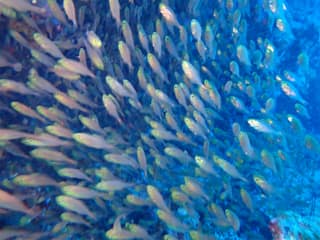
The selectable AF point helped when I had time. Focus lock and recomposing helped when a fish stayed at a predictable distance. Neither method turns the TG-7 into a sports camera.
The burst numbers sound faster than the autofocus feels. Sequential Low captures around 5fps. Sequential High reaches roughly 10 or 20fps with the electronic shutter, but focus and exposure lock on the first frame. Pro Capture records at about 10fps and can save up to five frames from the half-second before I fully press the shutter.
Pro Capture can catch a fish leaving the frame or a quick behavior, but the fixed focus and exposure mean I still need to anticipate where the action will happen.
4K Video Works for Short Dive Clips
The TG-7 records 3840 × 2160 H.264 video at 30p or 25p, at about 102Mbps. There is no 4K/60p, Log profile, 10-bit recording, or advanced video autofocus configuration.
One limit is easy to miss: OM System lists a 29-minute recording ceiling, but each movie file is limited to 4GB. At the 4K data rate, that works out to about five minutes. A 256GB card holds many clips; it doesn't turn them into one long clip.
For the way I shoot underwater, five minutes isn't a serious creative limit. Short, deliberate clips are easier to hold steady and edit than one uninterrupted recording of a dive. It's still a real limit for a fixed shot, interview, long animal behavior, or anything that needs the camera to keep rolling.
Normal Full HD reaches 60p. Silent high-speed modes record 1080p/120, 720p/240, or 640 × 360/480 for up to 20 seconds, with focus and exposure fixed when recording starts. That 480fps setting comes with a steep drop in resolution.
Video stabilization is digital, not the sensor-shift system used for stills, and enabling it crops the edges. A tray helps me make slower movements, but it can't replace the horizon leveling and stabilization in a current action camera.
The TG-7 records vertical orientation metadata, one of its changes from the TG-6. That saves me a rotation step for Reels or Shorts. I still prefer to capture important scenes horizontally in 4K and make separate vertical clips when the subject allows it.
The OrcaTorch Changed More Than a Menu Setting
Water strips away warm colors as depth and distance increase. White balance can shift the file, but it can't bring back light that never reached the subject. An external light changed my close footage more than another hour in the picture-mode menu would've.
The OrcaTorch D710V MK2 in my kit is a continuous video light rated at 2,300 lumens in its high white mode with a 120-degree flood beam. It also has a 750-lumen low white mode, red light, and UV light, runs on one USB-C rechargeable 21700 battery, and carries a 150-meter depth rating.
The broad beam matters for video because a narrow dive torch creates a bright center surrounded by dark edges. Even this light only works nearby. It can light a fish, nudibranch, or coral head; it can't put daylight back across a distant reef.
For still photographs of moving marine life, a strobe is the stronger next purchase. Its brief flash can freeze motion with more power than a continuous light. I chose one video light because it was simpler, worked for both stills and video, and kept the travel rig narrow.
TG-7 Handling, Battery Life, and Durability
Handling and the Learning Curve
At 249 grams with its battery and card, the TG-7 is light enough to bring on days when photography is not the plan. Its 113.9 by 65.8mm face is closer to a thick compact camera than a mirrorless body.
The grip is small but textured, and the important controls are physical. Wet fingers don't mix well with a touchscreen, so the fixed, non-touch 3-inch LCD is less of a drawback underwater than it sounds on land. Inside the PT-059, larger external buttons and levers pass those controls through the housing.
The camera is easy to start using and takes longer to learn. Auto and underwater modes work quickly. The menu hides many of the settings that helped me most—RAW+JPEG, Super Macro AF, underwater white balance, minimum shutter speed, custom modes, focus bracketing, and video quality—so I needed time to remember where they lived.
Practice changing modes, focus area, video, and light output with the rig assembled before the trip. Underwater is a bad place to learn what each housing button does.
The rear screen is adequate, not luxurious. It doesn't tilt, there's no viewfinder, and bright reflections can make critical focus difficult to judge. I reviewed the histogram and zoomed into important frames instead of trusting the small preview alone.
Battery, Charging, Storage, and Travel Details
The LI-92B battery is rated for about 330 stills under CIPA conditions. Wi-Fi, GPS logging, cold temperatures, image review, video, and repeated zooming can reduce that number. A long dive also prevents a battery change until the housing is rinsed and dry.
USB-C in-camera charging is one TG-7 upgrade I appreciated over the TG-6. I could carry the same connector type as my other travel devices, although the USB 2.0 port doesn't make card transfers fast. An external card reader is still the better way to unload a full card.
The camera has Wi-Fi and Bluetooth for OM Image Share, plus built-in GPS, an electronic compass, a pressure sensor, and a thermometer. The LOG switch can record a track with sensor data even while I'm not taking photographs. I wouldn't use those readings for navigation; OM System says they aren't guaranteed to be precise.
I used a 256GB SanDisk Extreme PRO UHS-II V60 card. It's a good card, but it's more card than the TG-7 can use. The camera's slot is UHS-I, and OM System's card guidance calls for UHS-I U3 media for 4K and high-speed video.
The UHS-II card works because it's backward-compatible. Its advertised read and write speeds apply only in a compatible UHS-II host, so the TG-7 can't reach them. A UHS-II reader can still make offloading faster, and the card can move to a faster camera later. For this camera alone, a genuine UHS-I U3 or V30 card from a trusted seller is enough.
Waterproofing and Saltwater Maintenance
OM System rates the bare TG-7 waterproof to 15 meters or 50 feet for up to 60 minutes per underwater session. The published ratings also cover a 2.1-meter drop, 100 kilograms of crushing force, temperatures down to 14°F, and IP6X dust protection.
I treated those numbers as limits to stay inside, not permission to get careless. Sand, hair, lint, salt crystals, a damaged gasket, or a door that isn't fully locked can defeat a waterproof camera.
Before I entered the water, I checked both doors, the seal surfaces, and the locks somewhere clean and dry. I wouldn't open the battery/card door or USB door on a beach, boat, or wet towel.
After saltwater use, I followed the TG-7 manual: keep the covers firmly closed, remove the lens ring, and soak the camera in clean freshwater for about 10 minutes, starting within 60 minutes of leaving the water. Then let it dry in the shade with ventilation before opening either door.
I gave the full rig the same treatment. I left the housing closed until the outside was rinsed and dry, soaked the housing, tray, clamps, and light in freshwater, worked the housing buttons while they were submerged, separated the metal joints after the soak, and let every part dry in the shade.
For the PT-059 O-ring and lubricant, follow its own instructions. Extra grease won't fix a dirty or damaged seal.
OM System TG-7 vs. Phone, GoPro, Mirrorless, and TG-6
The TG-7 for Snorkeling
For a snorkeler who values still photographs and macro, it's one of the most complete compact choices. The bare camera is rated much deeper than most surface snorkeling, and it doesn't need a housing to use physical controls, RAW capture, optical zoom, or microscope modes.
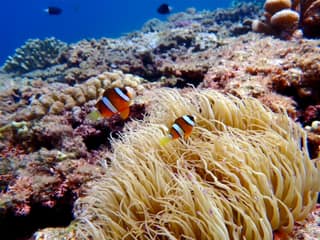
It isn't the automatic winner for every snorkeler. A GoPro or DJI action camera is better suited to stabilized, wide, high-frame-rate video. A phone in a good housing may produce stronger automatic HDR and make sharing faster. A less expensive waterproof compact may be enough for one pool day.
The TG-7 earns its price when I use the features that separate it: RAW stills, close focus, optical zoom, physical controls, and a housing system that can grow with my diving.
Versus a Phone
A recent phone can make a polished file in bright, shallow water, and computational processing often handles HDR better. The TG-7 gives me a dedicated device, physical controls, one-centimeter focus, RAW files, an optical zoom, and less risk to the device I need for the rest of the trip.
Versus an Action Camera
An action camera wins for wide video, stabilization, high frame rates, and helmet or chest mounting. The TG-7 wins for close-up stills, conventional composition, optical zoom, and expansion with a purpose-built housing, wet lenses, strobes, and lights.
Versus My Sony A7 IV
The Sony produces cleaner files, more dynamic range, better autofocus, higher resolution, and far more exposure control. Once underwater housing, port, lighting, travel case, and flood risk enter the comparison, it becomes a different class of purchase and a much larger object to carry.
The TG-7 doesn't replace my Sony. It covers a job for which the Sony system was more camera—and more risk—than I wanted to bring.
Versus the Olympus TG-6
People still search for “Olympus TG-7,” but the current model is branded OM System after Olympus transferred its imaging business. The TG-7 keeps the TG-6's core sensor, 25–100mm-equivalent lens, macro system, and 4K/30p recording.
The main TG-7 changes are USB-C, vertical-video support, a revised grip, improved screen color, in-camera time-lapse changes, Construction modes, and support for the RM-WR1 remote. The PT-059 housing works with both cameras.
If I already owned a working TG-6, I wouldn't upgrade for image quality. Starting fresh, I prefer the TG-7's USB-C charging and current support.
My OM System TG-7 Underwater Camera Setup
My setup started with the camera. The rest of the gear changed how deep I could take it, how securely I could hold it, and how much color I could put back into a nearby subject.
- Camera: OM System Tough TG-7 Red — the 12MP camera, lens, macro tools, and recording system reviewed here.
- Bare-camera strap: JJC Floating Wrist Strap — rated by JJC for devices up to 11.2 ounces, enough for the 8.8-ounce TG-7 but not the assembled housing rig.
- Scuba housing: OM System PT-059 Underwater Housing — raises the rated depth to 45 meters and gives me access to the controls, a tray mount, optical-flash support, and a threaded 52mm port for compatible wet accessories.
- Tray: DIVEVOLK Single Handle Tray — an aluminum tray with an EVA-covered handle, dual 1/4-inch mounting points, and a one-inch ball head.
- Clamps: MINIFOCUS One-Inch Triple-Hole Ball Clamps — the adjustable connection between standard one-inch balls in the light and tray system.
- Memory card: SanDisk 256GB Extreme PRO UHS-II V60 SD Card — ample capacity and fast offloads in a UHS-II reader, even though the camera itself runs it at UHS-I speed.
- Video light: OrcaTorch D710V MK2 — a 2,300-lumen white flood light with red and UV modes.
One shopping note: the Amazon title for the PT-059 may call it “metal,” but the housing body is mainly polycarbonate. The lens window is coated glass, other parts use metal, and OM System rates the case to 45 meters.
The housing is optional for shallow snorkeling. For scuba, repeated saltwater use, or any camera-and-light tray, I'd use it.
I only use the floating strap with the bare camera. JJC rates it for devices up to 11.2 ounces, which doesn't leave much room above the TG-7's 8.8-ounce operating weight. The PT-059, tray, clamps, and light add far more mass, so the assembled rig needs a properly rated tether and a buoyancy check in controlled water.
How I Assemble the Dive Rig
I set up in a clean, dry room, never at the water's edge:
- Charge the camera and light, then format the card in the TG-7.
- Set still quality, video quality, white balance, and the two custom positions before closing the housing.
- Inspect the camera-door seals, housing O-ring, and both mating surfaces for hair, grit, twisting, or damage.
- Place the TG-7 in the PT-059 and close the housing without forcing the latch.
- Mount the housing to the DIVEVOLK tray.
- Attach the OrcaTorch's ball bracket to the tray's one-inch ball with the clamp arrangement required by the included hardware.
- Aim the light slightly outward so the beam crosses the subject instead of lighting every particle directly in front of the lens.
- Attach a tether suitable for the complete rig.
- Test the empty or loaded housing in shallow water before the dive.
The exact clamp count depends on the light bracket and arm pieces in the package. Check the listing contents; a two-pack of clamps isn't necessarily a complete arm.
TG-7 Limitations and Who Should Buy It
What I Wish the TG-7 Did Better
The most useful update would be a larger or newer sensor without giving up the close-focus system and compact body. Twelve megapixels is workable; cleaner shadow detail and stronger high-ISO files would improve more photographs than adding another scene mode.
I also want 4K/60p, a file system that doesn't stop 4K near five minutes, stronger video stabilization, and more dependable autofocus on moving subjects.
Full manual exposure or at least Shutter Priority would make the camera easier to use with strobes and moving marine life. The minimum-shutter setting works, but it's hidden and still leaves the camera in charge of part of the exposure.
A brighter, tilting screen would help on land. A touchscreen would be less useful underwater, but touch could speed menu work before the camera goes into its housing.
These aren't small complaints. They're why the TG-7 can't match a larger compact or mirrorless camera when conditions get difficult, and why my rating stops just short of a 9.
Who I'd Recommend the OM System TG-7 To
The TG-7 fits:
- travelers who want one compact camera for land, rain, beach, and water;
- snorkelers who care more about stills and macro than high-frame-rate action video;
- recreational divers building a first compact housing system;
- creators who need short underwater clips beside RAW photographs;
- hikers, paddlers, boaters, and snow travelers who expose gear to rough conditions;
- photographers who want to explore close-up work without buying a separate macro lens;
- anyone who would rather keep a primary phone out of the water.
I'd skip it if low-light image quality, 4K/60p, long uninterrupted video, fast subject-tracking autofocus, or full manual exposure is central to the work. I'd also skip it for one afternoon of shallow-water video if an existing action camera already covers the job.
My Verdict After Okinawa
By the end of Okinawa, I knew exactly why the TG-7 worked for me. I didn't need a shrunken professional camera system. I needed a camera that could move from a day bag to snorkeling to a scuba housing without making every outing revolve around the gear.
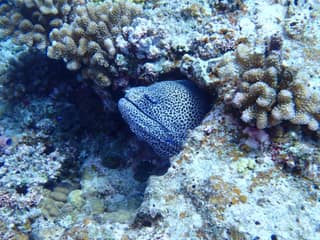
The files don't have the low-light flexibility of my Sony, and the video trails current action cameras. I ran into the 4GB movie cap, contrast autofocus, small fixed screen, and missing manual modes; none of them disappears just because I like the camera.
It still brought home the reef, fish, anemones, nudibranch, and small details I went to Okinawa hoping to photograph. The microscope system helped me more than a larger megapixel number would've, and the physical controls worked better in the water than a phone screen.
Start with the camera, a floating strap, and a real UHS-I U3 card for snorkeling. Add the PT-059 when depth, protection, or accessory mounting requires it. Add a tray and light when video and color become the priority.
Being able to start small and add only what the trip calls for is why the OM System Tough TG-7 earns an 8.9 from me.
Frequently asked questions
Is the OM System TG-7 good for underwater photography?
Yes, especially for travel, snorkeling, recreational diving with a housing, and close subjects. Its physical controls, underwater white-balance modes, RAW files, one-centimeter close focus, and accessory system are more useful underwater than its 12MP number suggests. The small sensor still struggles in dim water, so distance, light, and steady handling matter.
Is the TG-7 waterproof without a housing?
OM System rates the bare TG-7 to 15 meters or 50 feet. The manual limits each underwater session to 60 minutes and requires clean seals, fully locked doors, and a freshwater soak after saltwater use.
Do I need the PT-059 housing for snorkeling?
Not for ordinary shallow snorkeling within the camera's limits. The housing is useful for scuba, longer or repeated water use, extra protection, and attaching a tray, light, strobe, or wet lens. It raises the rated depth to 45 meters.
What does 44.4x macro mean on the TG-7?
It is a display-magnification figure for the microscope system, not a 44.4x optical zoom lens. The physical lens is a 4x optical zoom covering 25–100mm equivalent, while Super Macro and Microscope modes can focus about one centimeter from the subject.
Does the TG-7 shoot 4K at 60fps?
No. It records 4K UHD at 30p or 25p. Full HD reaches 60p in normal recording and 120fps in silent high-speed mode.
How long can the TG-7 record in 4K?
The camera has a 29-minute ceiling, but its 4GB maximum movie-file size is reached first at the roughly 102Mbps 4K data rate. OM System lists about five minutes per 4K clip, even when the card has much more free space.
Does the TG-7 need a UHS-II SD card?
No. Its slot supports UHS-I, and OM System calls for a UHS-I U3 card for 4K and high-speed video. A UHS-II card is backward-compatible, but the camera can't use the faster second row of contacts. The extra read speed can still help with a compatible card reader.
Is the TG-7 better than a GoPro or phone underwater?
It depends on the job. Recent action cameras are stronger for wide video, high frame rates, and stabilization, while phones use powerful computational processing. The TG-7 is stronger for close-up stills, optical zoom, RAW capture, physical controls, and use with a dedicated housing and lighting system.
Should a TG-6 owner upgrade to the TG-7?
Usually not for image quality. The TG-7 keeps the TG-6's core 12MP sensor, lens, macro system, and 4K/30p ceiling. Its main changes include USB-C, vertical-video metadata, a revised grip, Construction modes, time-lapse changes, and support for a wireless remote.
How should I clean the TG-7 after saltwater use?
Keep both camera doors closed, rinse off loose debris, and soak the camera in clean freshwater for about 10 minutes within 60 minutes of leaving the water. Dry it in the shade before opening a door. Rinse a closed housing and its controls as well, then inspect and maintain its O-ring separately according to the housing manual.


